Small Patio Furniture Layout: Make Room to Relax
Share
A small patio does not need more furniture to feel complete. It needs a clear purpose and pieces with the right proportions. The best small patio furniture layout creates an easy path outside, a comfortable place to settle in, and enough breathing room for the space to feel like a private retreat rather than an overcrowded corner.
Whether your patio is a compact apartment terrace, a narrow side-yard slab, or a petite backyard deck, thoughtful placement can make every square foot work harder. Start by deciding how you want to use it most often. A quiet morning coffee calls for a different arrangement than family dinners, poolside lounging, or evenings around a fire.
Start With the Patio's Job
Before choosing seating, picture the moment you want to create. If you primarily entertain two to four people, conversation seating may be a better investment than a dining set that only comes out for special occasions. If outdoor meals are part of your weekly rhythm, give the table priority and let the seating stay streamlined.
A small patio can comfortably support one main activity and one supporting activity. For example, a bistro table can serve as the anchor, with two chairs that also work for coffee or reading. Or a compact loveseat can become the focal point, paired with a small side table that holds drinks without interrupting the view.
Trying to fit a full dining zone, lounge zone, fire feature, and oversized planters into a limited footprint usually makes the patio feel smaller. The more confident choice is to select one destination worth lingering in and design around it.
Measure the Space Before You Shop
Beautiful furniture still needs clearance. Measure the patio's usable dimensions, then note door swings, steps, railings, grill locations, and any areas that collect runoff. These details determine where furniture can actually live.
As a practical rule, preserve a walking path of about 30 to 36 inches where possible, especially between the door and the seating area. Dining chairs need additional room to pull back. Allow roughly 36 inches from the table edge to a wall, railing, or planter if people will regularly sit there.
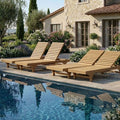
Scale matters as much as the measurements. Deep lounge chairs can be exceptionally comfortable, but two oversized chairs may consume the same footprint as a compact sofa with a pair of occasional seats. On a narrow patio, a shallower sofa, armless chairs, or a bench can preserve valuable circulation space.
Use painter's tape to test the footprint
Mark the dimensions of prospective furniture on the patio with painter's tape. Include chair pull-out space and room for side tables. Walk through the taped layout as if you are carrying a tray of drinks or opening the back door with groceries in hand.
This simple test exposes awkward layouts before a single piece arrives. It also helps you identify where a round table may move more easily than a rectangular one, or where one generous lounge chair is more useful than two cramped seats.
Choose One Strong Anchor Piece
Every polished patio needs a visual center. On a small space, that anchor should provide the greatest return on footprint. It may be a compact dining table, a well-proportioned outdoor sectional, a loveseat, or a small fire table designed for conversation.
For a square patio, a circular bistro or dining table is often an elegant choice. Its curved edge softens the geometry of the space, and guests can move around it more easily. A rectangular table works well on long, narrow patios when placed parallel to the longest side.
For lounging, place a loveseat or compact sectional against the most solid edge of the patio, such as an exterior wall or privacy screen. This creates a sense of enclosure while leaving the open edge available for access and sightlines. Add one or two lightweight chairs opposite the main seating, angled slightly inward so conversation feels natural.
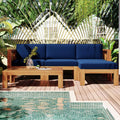
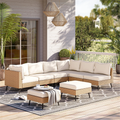
A sectional can be a smart small-space purchase, but only when its configuration fits the patio. A large L-shape that blocks the door or forces guests to squeeze around a corner will not feel luxurious. Look for a compact profile and make sure the chaise does not interrupt the main walkway.
Let the Edges Do More Work
The center of a small patio should stay relatively open. Place useful elements at the perimeter whenever possible: a narrow console against the wall, a bench along a railing, or planters that frame rather than divide the seating area.
A bench is especially versatile. It creates flexible seating for a dinner table, tucks neatly under the table when not in use, and can hold extra guests without introducing several separate chair legs into the layout. Choose cushions made for outdoor exposure so comfort does not come at the expense of seasonal durability.
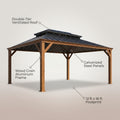
Vertical elements also deserve attention. A pergola, gazebo, or shade structure can visually define the patio without consuming floor area. Beyond providing relief from direct sun, overhead coverage makes a modest footprint feel intentional - more like an outdoor room than leftover space beside the house.
If privacy is a concern, use slatted panels, tall planters, or a structure with integrated screening on the side that needs it most. Avoid surrounding every edge with tall, solid barriers. A small patio still benefits from light, airflow, and a view outward.
Create Zones Without Adding Clutter
A rug can establish a lounge area, but it should support the arrangement rather than swallow it. In a small seating zone, choose a rug large enough for the front legs of the sofa and chairs to rest on it. A rug that is too small can make furniture look scattered.
For dining patios, the table itself usually defines the zone. Rather than adding multiple decorative layers, use a centerpiece with a low profile and reserve nearby surfaces for the practical items that make hosting easier: a tray, lantern, beverage bucket, or serving board.
Lighting should be layered but restrained. Soft overhead string lighting under a pergola, a pair of lanterns, or subtle solar path lights can extend the patio's use after sunset. Keep cords and fixtures out of the main walking route. The goal is a warm evening glow, not visual noise.
Favor pieces that earn their place
On a compact patio, every item should offer comfort, storage, flexibility, or atmosphere. A small ottoman can serve as a footrest, an extra seat, or a spot for a tray. Nesting tables can expand when guests arrive and tuck away afterward. Stackable dining chairs are practical when a patio occasionally needs to become an open play or gathering space.
That does not mean everything must be multipurpose. A beautifully made teak chair or a substantial fire feature may be chosen simply because it makes the patio feel special. The key is to give that statement piece enough surrounding space to be appreciated.
Small Patio Furniture Layout Ideas by Shape
A narrow rectangular patio is often best with furniture arranged in a straight line. Place a slim sofa or bench along the long wall, then add a pair of small tables rather than a large central coffee table. If dining is the priority, position a narrow rectangular table lengthwise and use a bench on one side.
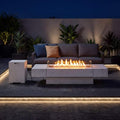
A square patio can handle a centered arrangement. A round table with four chairs is a natural fit, or place a compact conversation set around a round fire table. Maintain equal clearance around the group so the patio feels balanced from every angle.
For an L-shaped patio, let each leg have a distinct role. Put dining close to the kitchen or back door, then reserve the quieter leg for lounge seating. The corner becomes a useful transition point for a planter, side table, or sculptural outdoor lamp.
On a balcony-style patio, keep furniture low and open-framed. Two folding chairs with a petite table can feel far more inviting than a bulky set pressed against a railing. If there is room for a loveseat, pair it with one small movable table and leave the rest of the floor clear.
Keep the View and the Weather in Mind
The most comfortable layout accounts for the conditions you live with. In hot, sunny climates, orient seating toward shade and away from intense late-afternoon glare. In breezy areas, use a wall, screen, or substantial planter as a wind buffer, while keeping enough openness for air to move through.
Materials matter here, too. Teak develops character over time and brings warmth to a small patio without needing frequent replacement. Powder-coated aluminum offers a lighter visual profile and is easy to move. Weather-resistant cushions add the softness that turns outdoor seating into an all-evening destination, but they need storage or protective covers during prolonged storms and offseason months.
Oasis Patio Direct approaches outdoor furnishing as a lasting part of the home, not temporary seasonal decor. Choose pieces that can stand up to your climate and still look composed when the patio is set for an unplanned dinner or a quiet night outside.
Leave a little empty space on purpose. That open floor area is what lets guests move freely, lets the eye rest, and makes a small patio feel like a resort addition with room to breathe. When the layout supports the way you actually live, even a compact outdoor space can become the place everyone chooses to gather.