How to Arrange Patio Seating for Easy Living
Share
A beautiful patio can still feel unfinished when the seating is placed as an afterthought. Chairs pushed against the perimeter, a dining table stranded in full sun, or a sectional that blocks the only path to the house can make a generous outdoor area feel less inviting than it should. When you arrange patio seating with intention, the same square footage becomes a place for slow mornings, family dinners, poolside conversations, and evenings that linger around the fire.
The best layout is not necessarily the one that fills the patio. It is the one that makes people feel comfortable settling in. Start with how you want to use the space, then give every seating zone room to breathe, a clear purpose, and the comfort details that make an outdoor retreat feel considered.
Start With the Moment You Want to Create
Before measuring furniture, picture a typical evening outside. Are you serving dinner for six? Hosting neighbors around a fire pit? Looking for a quiet spot to read after work? Most patios work hardest when they support more than one of these moments, but one should lead the plan.
A dining-first patio needs an easy route from the kitchen, enough clearance for chairs to slide back, and shade during the hours you are most likely to eat outside. A lounge-first setting benefits from deeper seating, low tables for drinks, and a layout that encourages conversation rather than lining everyone up toward the yard. If entertaining is the priority, create a flexible arrangement that can welcome a crowd without making everyday use feel oversized.
This first decision keeps you from buying beautiful pieces that compete for the same patch of patio. A large outdoor sectional and a full dining set can coexist, but only if the space can accommodate two distinct zones without sacrificing circulation.
Measure the Patio Before You Choose the Pieces
Furniture dimensions tell only part of the story. What matters is the footprint once someone is seated, standing, walking through, or carrying a tray from the kitchen. Mark out proposed furniture sizes with painter's tape or cardboard before ordering. It is a simple step that reveals whether an arrangement feels generous or cramped.
Leave about 30 to 36 inches for primary walkways, especially between the house and the yard, grill, pool, or gate. Around a dining table, allow enough room for chairs to pull out comfortably. A smaller patio may need a round table, bench seating, or a compact loveseat rather than a large rectangular table with individual chairs on every side.
For conversation seating, place a coffee table roughly 16 to 18 inches from a sofa or sectional. Side tables should be close enough to reach without interrupting the line of the arrangement. These small measurements are what turn a stylish setting into one people actually use.
Arrange Patio Seating in Intentional Zones
Think of the patio as an outdoor room, or several rooms without walls. A rug, pergola, gazebo, planter grouping, or shift in furniture orientation can define each area while keeping the overall setting open and relaxed.
Build a conversation area first
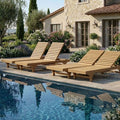
For a dedicated lounge zone, face seating inward whenever possible. Two lounge chairs opposite a sofa, or a pair of chairs angled toward a sectional, creates a natural circle for conversation. The goal is for guests to see one another without twisting sideways or raising their voices across an oversized table.
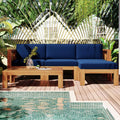
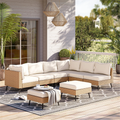
An L-shaped sectional is especially effective along a patio edge because it defines the zone without enclosing it completely. Use its open side to welcome people in, rather than aiming that opening toward a wall or railing. If the sectional faces a view, pool, or garden, add movable chairs that can turn toward the landscape or the group as needed.
Avoid placing every seat in a straight row facing one direction unless the patio is primarily designed around an outdoor screen or fireplace. Resort-style comfort feels social. Give people a reason to turn toward each other.
Give dining its own sense of occasion
A dining table should feel connected to the home but not caught in a traffic lane. Position it near the kitchen or door used for serving, while keeping the route around it clear. On an uncovered patio, consider the path of the afternoon sun before committing to placement. Even a beautiful teak dining set is more enjoyable when guests are not squinting through dinner.
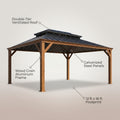
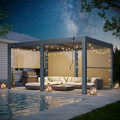
A pergola or gazebo can make the dining area feel like a true destination, offering structure overhead and an opportunity for adjustable shade, lighting, or privacy panels. In a smaller space, a dining bench along one side can save valuable clearance and create a more relaxed, gathered-in feeling.
Make the fire feature the evening anchor
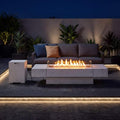
Fire pits and fire tables naturally draw people together, but they need breathing room. Arrange chairs or a curved sectional at a safe, comfortable distance based on the fire feature's instructions, leaving open access on at least one side. Low-profile lounge chairs work particularly well here because they keep sightlines open and invite a longer stay.
Do not force the fire zone into the center of every patio. If the view is the main attraction, place the fire feature slightly to one side so it enhances the setting rather than interrupts it. A fire table can also do double duty as the center table for a lounge arrangement, provided its height and heat output suit the seating around it.
Use Structure, Shade, and Privacy to Improve the Layout
Comfort is not only about cushions. The most successful patio seating plans account for sun, wind, and the degree of privacy you want at different times of day.
Place the deepest, most relaxing seating where shade is available during your favorite outdoor hours. Under a pergola, gazebo, or mature tree, a sectional becomes an inviting all-afternoon retreat. If your patio gets intense western sun, orient lounge seating away from the glare and consider an adjustable roof or side panels that can temper heat without shutting out the breeze.
Privacy features can also guide the arrangement. A bamboo-style screen, slatted wall, planter, or curtain panel can give a lounge zone a protected backdrop and make an open yard feel more intimate. Keep the highest visual barriers behind seating, not directly in front of it. You want privacy without losing the view that made the patio appealing in the first place.
In windy locations, avoid placing lightweight chairs where they will constantly shift or where cushions will need rescuing. Heavier teak, aluminum, and substantial woven frames tend to feel more grounded, while durable outdoor fabrics help the space stay polished through changing weather.
Choose Scale Over Matching Sets
A coordinated collection can make planning easier, but a patio does not need every piece to match perfectly. What matters more is shared scale, color direction, and material quality. A teak dining table can sit beautifully near an aluminum lounge set when both have clean lines and cushions in related neutral tones.
Keep tall pieces, such as bar tables, large planters, and privacy screens, toward the perimeter so they do not interrupt sightlines. Use lower pieces in the center of a seating area to preserve openness. On a compact patio, furniture with exposed legs and slimmer arms can feel lighter than bulky, fully upholstered silhouettes.
If you have a generous backyard, resist scattering chairs across the entire surface. A few well-defined groupings feel more welcoming than isolated seats with no table, shade, or purpose. Empty space is useful when it creates a clear path, frames a view, or leaves room for children and guests to move comfortably.
Add the Details That Keep Guests Outside
Once the major pieces are in place, layer in the practical comforts that encourage people to stay. Every seated guest should have access to a place for a drink, a little ambient light after sunset, and enough cushion support to relax. An outdoor rug can soften a lounge zone, while lanterns, overhead lighting, or discreet path lights make circulation safer and more inviting.
Choose cushions and textiles that complement the architecture of the home rather than competing with it. Warm neutrals, deep greens, soft blues, and natural wood tones create an easy resort mood that works across seasons. Add color through pillows, a throw, or a few planters so the larger investment pieces remain timeless.
Finally, stand at each entrance and look into the space as a guest would. The first view should reveal an invitation: a pair of chairs, a table set for dinner, or a sheltered lounge area that feels ready for the evening. That visual welcome is often the difference between a patio that looks furnished and a private retreat that feels lived in.
A thoughtful arrangement does not need to be complicated. Give people a clear place to gather, an easy way to move, and enough shade, warmth, and comfort to forget about the clock. The patio will do the rest.