7 Real Differences Between Wood Fired and Gas Pizza Ovens
Last Updated: November 4, 2026
Quick Summary
Choosing between wood fired and gas pizza ovens comes down to control versus character: gas heats in roughly 15 to 20 minutes and holds a steady temperature with a dial, while wood delivers smoke, char and leopard spotting that gas cannot replicate. Buy for how you cook on a normal Tuesday, not your best party.
- Wood wins on flavor with smoke infusion, charring and leopard spotting that define Neapolitan style pizza.
- A gas oven with a wood chip smoker box adds measured smoke without managing a fire all evening.
- Plan roughly a 3-foot buffer on all sides for a freestanding oven's safe operation and airflow.
- Compare fuel by cost per session, since a heavy refractory dome holds heat between pies.
- Wood has a real skill curve, and most cooks need several sessions to get comfortable.
Table of Contents
- Wood Fired and Gas Pizza Ovens: The Core Trade-Off
- Wood vs Gas Pizza Oven Taste: Smoke, Char, and Control
- Heat-Up Time, BTU Output, and Temperature Regulation
- Outdoor Pizza Oven Installation Requirements and Space Planning
- Ooni Pizza Oven Gas vs Wood: What the Popular Format Gets Right
- Fuel Costs, Maintenance, and the Skill Curve Nobody Mentions
- Matching the Oven to Your Patio Setup
- Frequently Asked Questions
Wood Fired and Gas Pizza Ovens: The Core Trade-Off
Choosing between wood fired and gas pizza ovens comes down to one question: do you want to manage a fire, or do you want to turn a dial? Wood delivers smoke and drama. Gas delivers repeatability and speed. This decision shapes how often the oven actually gets used. Most people overestimate how often they will tend a live fire on a weeknight. Below, we break down the seven differences that matter, from taste to fuel cost to the skill curve nobody warns you about.
The core trade-off is control versus character. A gas oven holds a steady temperature with minimal attention. A wood oven rewards attention with flavor you cannot replicate any other way. Neither is better in the abstract; the right pick depends on your patio, your patience, and your guest list.
Wood vs Gas Pizza Oven Taste: Smoke, Char, and Control
Wood wins on flavor, and it is not close. Burning hardwood releases aromatic compounds that settle into the crust and toppings, producing the smoke infusion and charring that define Neapolitan style pizza. You get leopard spotting on the underside, a blistered rim, and a faint campfire note that gas simply cannot produce.
Gas, by contrast, bakes clean and neutral. Your sauce tastes like sauce, your cheese like cheese. For some cooks that is a feature, not a bug: delicate toppings like fresh basil or prosciutto stay bright instead of getting swallowed by smoke.
Here is the honest middle ground. A gas oven with a wood chip smoker box lets you add a measured amount of smoke without managing a fire all evening. It is not identical to a true wood burn, but for most backyard cooks it closes enough of the gap to matter. If authentic smoke and char is the whole point for you, explore the dedicated wood fired oven and skip the compromise.

Heat-Up Time, BTU Output, and Temperature Regulation
Gas heats faster and holds steadier. A gas oven reaches cooking temperature in roughly 15 to 20 minutes and stays there with a temperature gauge and a turn of the knob. Wood takes longer to reach temperature and requires you to feed and reposition logs to steer the flame management and heat retention inside the dome.
BTU output tells you how much heat a gas burner can generate, and it is the spec to compare when shopping gas. Higher BTUs generally mean faster startup time and better recovery time between pies. Wood ovens do not rate in BTUs; their performance depends on thermal mass, refractory brick, and how well the dome geometry radiates heat onto the baking surface.
Temperature regulation is where gas quietly wins for entertaining. When you are cooking for twelve people, a steady oven means pie number twelve comes out as good as pie number one. If convenience and consistency top your list, see the specs on the freestanding gas model.

Outdoor Pizza Oven Installation Requirements and Space Planning
Installation depends on fuel, and the safety rules differ more than the fuel lines do. Gas ovens need a propane tank connection or a natural gas line run to the unit, plus clearance from combustible surfaces. Wood ovens need a safe landing zone for embers, a spark arrestor, and proper ventilation so smoke and soot accumulation do not stain your structure.
Plan your footprint before you buy. A freestanding oven needs roughly a 3-foot buffer on all sides for safe operation and airflow. A built-in unit needs a non-combustible surround and a chimney path. Check local code on gas line permits before you trench; that step trips up more DIYers than any other.
Before you build, check with your insurance carrier about how a wood-fired oven would affect your policy, including any clearance requirements to the house and to combustible fencing. Get the answer in writing before you pour a pad.
Local codes govern both wood and gas installations, so check with your local building department about permit and clearance requirements before you build, and keep the manufacturer's spec sheet on hand for inspection.
The oven is rarely the whole project. Most homeowners pair it with counter space, storage, and seating, and this guide to designing a luxury outdoor kitchen with a pizza oven walks through the layout decisions that keep the oven from feeling bolted on.
Ooni Pizza Oven Gas vs Wood: What the Popular Format Gets Right
The Ooni pizza oven gas vs wood debate captures the whole category in miniature. Portable multi-fuel ovens made this decision mainstream by letting one unit run on propane or hardwood with a swap of the burner or fuel tray. That flexibility is genuinely useful for renters and small patios. Mastering the transition between these heat sources requires a refined approach to pizza oven tools that ensures consistent results regardless of the fuel you choose.
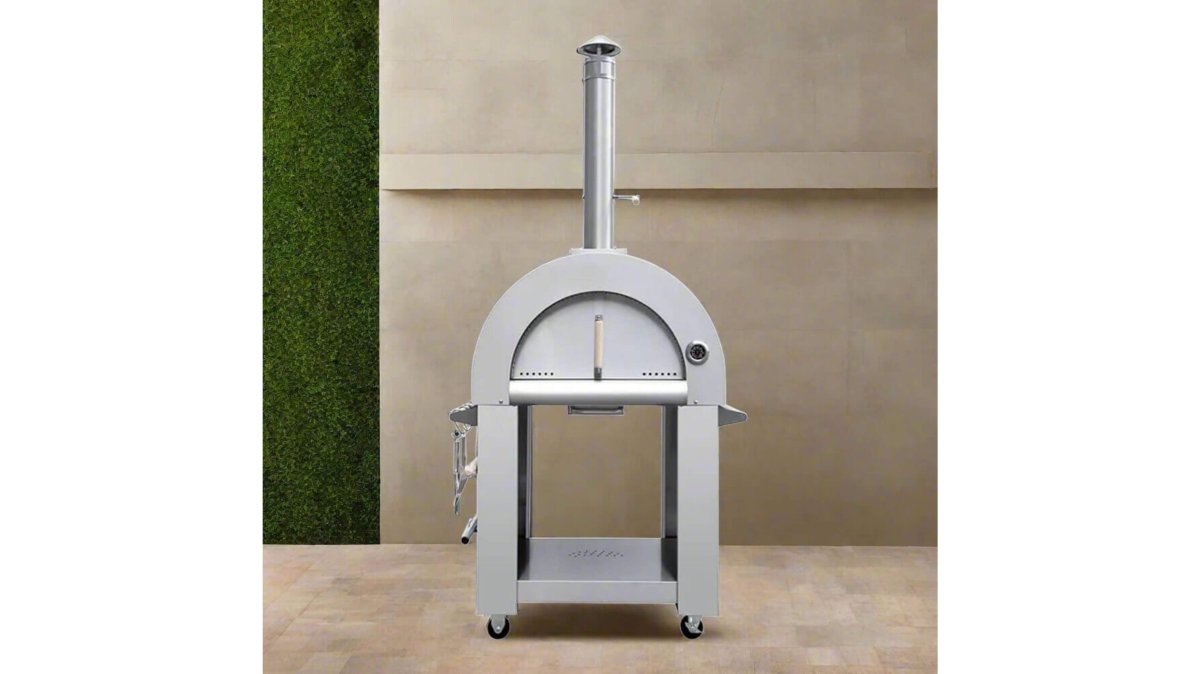
KoKoMo Grills Premium 32-Inch Stainless Steel Wood Fired Pizza Oven →
What the portable format gets right: low commitment, fast startup time, and the freedom to experiment with both fuels before investing in a permanent build. What it glosses over: small ovens have limited thermal mass, so they cool quickly between pies and struggle to hold temperature for a crowd. Curing process and ash management still apply, just on a smaller scale.
If you are testing whether live-fire cooking suits you, a portable unit is a smart first step. If you already know you will host regularly, a full-size built-in or cart oven will serve you better long term.
Fuel Costs, Maintenance, and the Skill Curve Nobody Mentions
Long-term cost of ownership splits cleanly, and the split is bigger than most buyers expect. Propane and natural gas cost money every time you cook, but the expense is predictable and the maintenance is light: wipe the pizza stone, empty the drip tray, inspect the burner. Hardwood, especially kiln-dried splits, often costs less per cook in many markets but demands sourcing, dry storage, and ash management after every session.
The useful way to compare is cost per session, not cost per cord or per gallon. A gas oven's fuel spend tracks how often you cook. A wood oven's spend tracks how much fuel you burn to reach and hold temperature, which is why thermal mass matters for the budget as much as for the crust: a heavy refractory dome holds heat between pies, while a thin portable shell forces you to keep feeding the fire.
Maintenance is the other half of ownership cost. Gas is a wipe-down and an annual burner inspection. Wood is a routine: scoop ash once the oven cools, check the chimney and spark arrestor for soot accumulation, and keep the dome dry. Left wet, a refractory oven can crack, and that repair dwarfs any fuel savings.
Then there is the skill curve. Gas has almost none: set the dial, launch the pie, watch the full-view window. Wood has a real learning curve. You will scorch crusts before you learn flame management, and you will overshoot temperature before you understand heat retention. Most cooks need several sessions to get comfortable. That is not a flaw, but it is a commitment, and it is the single biggest reason wood ovens sit unused.
Watch out: buying a wood oven without a dry, covered place to store seasoned hardwood leads to damp fuel, smoky fires, and frustrating results. Solve storage before you solve the oven.
| Factor | Wood Fired | Gas |
|---|---|---|
| Flavor | Smoke, char, leopard spotting | Clean, neutral, optional smoke box |
| Heat-up | Slower, needs fire management | Fast, roughly 15-20 minutes |
| Temperature control | Manual, by feel and flame | Dial and gauge, steady |
| Fuel | Hardwood, dry storage required | Propane or natural gas |
| Maintenance | Ash clean-out, soot checks | Light wipe-down |
| Skill curve | Steep, several sessions to learn | Minimal |
| Best for | Flavor purists, weekend hosts | Weeknight cooks, frequent entertaining |
Matching the Oven to Your Patio Setup
Start with how you actually live outside. If you cook midweek and want dinner on the table without babysitting a fire, gas is the practical answer. If your patio is an event space and the ritual of building a fire is part of the appeal, wood is worth the effort. A dual-fuel oven resolves the tension by letting you pick per occasion, which is why it has become our most-asked-about configuration.
Then match the oven to the rest of your build. Counter height, counter depth, and finish should tie into your existing materials so the oven reads as designed-in, not added-on. Browse the outdoor kitchen components guide for the pieces that pair well with a built-in oven, and if you want to see the trade-off resolved in a single unit, view the dual-fuel gas or wood oven.

Buy for the way you cook on a normal Tuesday, not the way you imagine your best party. The oven you use weekly beats the one you fire up twice a year.
Frequently Asked Questions
Are wood-fired pizza ovens better than gas ovens?
Neither is better across the board. Wood fired and gas pizza ovens serve different priorities. Wood gives you smoke infusion, charring, and leopard spotting that gas cannot fully replicate, which is why Neapolitan style purists favor it. Gas wins on startup time, temperature regulation, and repeatability for weeknight cooking. The right pick depends on whether you value flavor depth or convenience more, and whether your patio can support wood storage and ventilation.
Can gas pizza ovens reach the same temperatures as wood-fired models?
Many gas models reach high heat quickly and hold it steadily, and a dual-fuel oven like the KoKoMo Grills Premium 32-Inch Stainless Steel Dual Fuel Gas Or Wood Fired Pizza Oven can reach high temperatures quickly and evenly. Wood ovens can hit very high dome temperatures, but they require a longer curing and startup process and constant flame management. The practical difference is control: gas holds a set temperature, while wood demands active feeding and vent adjustment to keep heat where you want it.
How much maintenance does a wood-fired pizza oven require?
More than gas. Wood ovens need ash management after every session, soot accumulation cleanup on the dome and baking surface, and periodic inspection of the refractory brick or ceramic cooking surface for cracks. Gas ovens mostly need a wipe-down of the pizza stone and an occasional burner check. If you want low-effort ownership, gas is the simpler path; if you enjoy the ritual, wood maintenance is part of the appeal.
What are the installation requirements for an outdoor pizza oven?
Plan for a level, heat-resistant base, clearance from combustible walls and overhead structures, and ventilation for smoke and gas exhaust. Wood ovens need chimney or flue routing and dry wood storage nearby. Gas models need a propane tank or natural gas line, and permanent builds may require a permit and inspection under local codes. Cart-mounted ovens like the KoKoMo Grills 32-Inch Wood Fired model can run as stand-alone units or be built into an outdoor kitchen, which gives you flexibility before committing to a permanent footprint.
The difference between an oven you love and one you regret usually comes down to matching fuel to lifestyle, not chasing the trendiest spec. At Oasis Patio Direct, we help you get that match right with weather-resistant materials built for all seasons, a 30-day risk-free trial, and free shipping on orders over $100. Get started with Oasis Patio Direct and turn your patio into the retreat you actually use.