Privacy Screens That Make a Patio Feel Private
Share
A beautiful patio can still feel unfinished when every conversation, lunch, or quiet morning coffee is on display. Privacy screens solve that problem without closing off the outdoors. Used thoughtfully, they create the sense of a tucked-away retreat while preserving the light, breezes, and open-air comfort that make time outside worthwhile.
The right screen does more than block a neighbor's view. It can define a dining area, soften the edge of a pool deck, give a pergola more presence, or make a bare patio feel like a destination worth lingering in. The best choice depends on what you need to conceal, how much sun and wind your space receives, and the look you want to live with every season.
Start With the View You Want to Change
Before choosing a material or style, stand in the spot where you spend the most time outside. Sit at your outdoor dining table, settle into the sectional, or step into the lounge chair you use at the end of the day. Notice exactly where the unwanted sightline begins. It may be a second-story window, a driveway, an adjacent deck, or an open property line.
This step prevents a common mistake: buying a screen that is attractive but too short, too narrow, or positioned where it does little to create privacy. A screen does not have to cover an entire boundary to be effective. Often, a well-placed panel that interrupts one direct line of sight makes the whole setting feel more protected.
Think about function, too. If your patio is primarily for dinner parties, screening the seating and dining zone may be enough. If it is a poolside retreat, you may want a more continuous backdrop that makes changing, sunbathing, and relaxing feel less exposed. For a compact urban patio, vertical screening can add privacy without taking up precious floor space.
Choose Privacy Screens for How You Use the Patio
Privacy is only one part of the decision. Outdoor materials also affect airflow, shade, maintenance, and the overall character of the space.
Slatted wood and composite panels
Horizontal or vertical slats bring architectural structure to a patio. They work especially well beside a modern pergola, teak dining set, or tailored outdoor sectional because they feel intentional rather than improvised. Spacing between slats lets air move through while breaking up views from nearby homes.
Wood offers warmth and a natural, resort-inspired finish, but it needs the right care for its species and climate. Teak is prized for its durability and rich color, while treated wood may require periodic sealing or staining. Composite options can be a practical choice for homeowners who want the linear look of wood with less routine upkeep.
Bamboo and natural-reed screening
Bamboo panels bring an easy, relaxed sense of escape to a garden, pool area, or covered patio. Their texture pairs beautifully with woven seating, warm wood, lush planters, and soft outdoor lighting. Bamboo can offer substantial visual coverage, though quality and construction matter. Look for outdoor-rated materials and secure mounting, especially in wind-prone areas.
Natural screening is best when you want privacy that feels organic rather than formal. It may not suit every architectural style, and it generally will not last as long as metal, composite, or high-quality hardwood. Still, in the right setting, it can make an ordinary patio feel far more inviting.
Metal decorative panels
Powder-coated metal panels offer crisp lines, lasting strength, and the option of patterned cutouts that cast beautiful shadows across a patio. They are an excellent fit for contemporary homes and areas exposed to strong sun, rain, or temperature swings. A dark bronze, black, or warm neutral finish can visually ground an outdoor lounge without competing with the furniture.
The trade-off is that decorative patterns provide filtered privacy rather than complete coverage. That can be ideal when you want to soften a view and retain light, but less helpful if a close neighbor has a direct sightline into your seating area. Pairing metal panels with tall planters or a pergola curtain can create more coverage where needed.
Fabric curtains and outdoor shades
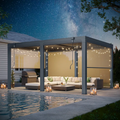
For patios with a pergola, gazebo, or covered structure, weather-ready curtains and shade panels are among the most flexible privacy solutions. Draw them closed for an intimate dinner or a slow Sunday afternoon, then open them to welcome a breeze and a wider garden view.
Fabric adds softness that hard panels cannot. Choose fade-resistant, mildew-resistant outdoor textiles, and make sure the mounting hardware is built for your local weather. Curtains can move dramatically in the wind, so they are better suited to covered spaces or areas where tiebacks and weighted hems can keep them under control.
Use Layers Instead of Building a Wall
The most welcoming patios rarely rely on one solid barrier. Layered privacy often looks more polished and feels more comfortable. A slatted screen behind a sectional, for example, can be softened by tall planters and finished with a lantern or wall-mounted light. The result has depth, texture, and a more established feel.
Planting is especially useful when a full-height screen would feel too imposing. Ornamental grasses, evergreen shrubs, climbing vines, or potted trees can filter views while bringing movement and seasonal color to the space. Be realistic about growth time, however. Young plants need several seasons to provide meaningful coverage, and their water needs may be higher near hot paving or pool decks.
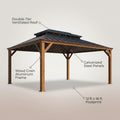
A structure can also do part of the work. A pergola with a defined roofline naturally makes a patio feel more enclosed, even before screens or drapery are added. Side panels, louvers, and curtains can then provide privacy precisely where it is needed rather than making the entire space feel shut in.
Get Height, Placement, and Airflow Right
A privacy screen should meet the eye line of the people using the space. For seated dining or lounging, a screen around 5 to 6 feet tall is often effective. If the concern is an elevated neighboring window, you may need a taller solution, a pergola roof element, or a carefully positioned tree canopy rather than an excessively tall fence-like panel.
Placement matters as much as height. Positioning a screen close to the seating area can create a cozy room-like feeling with a smaller footprint. Moving it toward the property edge preserves more open patio space, but may require a wider or taller installation to block the same view. Test the location with painter's tape, a temporary fabric panel, or even cardboard before committing to permanent hardware.
Do not overlook wind. Solid screens catch more air than open slats or perforated metal, which can affect both comfort and structural requirements. In exposed areas, use properly rated anchors and posts, and consider a design that allows controlled airflow. A patio should feel sheltered, not stuffy.
Make Privacy Part of the Overall Design
The screen should relate to the rest of the outdoor setting. Match warm wood tones with teak or wood-look furniture. Use black metal details to echo a pergola frame, fire pit base, or dining-chair legs. If your cushions and rug are light and airy, a darker screen behind them can add contrast and make the seating arrangement feel more intentional.
Lighting extends the effect after sunset. Soft string lights overhead, sconces on a nearby structure, or low landscape lighting around planters make screened areas feel inviting rather than closed in. Avoid placing bright lights directly behind a screen if privacy is the goal, since backlighting can turn a textured panel into a silhouette.
For homeowners building a patio in stages, start with the area you use most. One well-designed private corner can transform how often you enjoy the backyard. From there, add dining, shade, fire, and landscaping in a way that feels cohesive instead of crowded.
Check Practical Details Before You Install
Permanent privacy screens may be subject to local zoning rules, HOA guidelines, property-line setbacks, or permit requirements. This is particularly relevant for tall structures, freestanding panels, and installations attached to an existing deck or pergola. Confirm the rules before ordering materials or scheduling installation.
Also consider maintenance access. Leave room to clean behind the screen, trim plants, and reach any exterior utility equipment. If the screen is near a grill or fire feature, maintain appropriate clearances and choose noncombustible materials where necessary. A refined outdoor retreat should be easy to enjoy, not another weekend chore waiting to happen.
A privacy screen is most successful when it gives your patio a feeling of arrival: a place set apart for conversation, rest, and long evenings outside. Choose the level of coverage that suits your life, then let durable materials, comfortable furnishings, and a little greenery turn that protected corner into the part of home everyone wants to gather in.