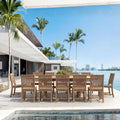
Poolside Furniture That Feels Like a Resort
Share
The best poolside furniture does more than fill the deck. It changes the rhythm of the day: a quiet coffee before the water warms, an unhurried afternoon under shade, a dinner that carries on after the sun goes down. The goal is not to recreate a crowded resort. It is to create a private retreat that feels considered, comfortable, and ready whenever you are.
That takes more than choosing a few chairs in a color you like. Around a pool, furniture has to handle direct sun, splashing water, bare feet, wet swimsuits, sunscreen, and the visual weight of the landscape. A beautiful setting should still feel easy to live with.
Start With How You Want to Use the Space
A pool deck can serve several purposes, but every area does not need to do all of them. Before choosing pieces, think about what actually happens outside at your home. If your family spends long afternoons in and out of the water, comfort and quick-drying materials may matter most. If you host weekend gatherings, you may need a conversation area that keeps guests close to the action without forcing everyone into a row of loungers.
Most well-designed poolsides have distinct zones. A sunbathing zone belongs closest to the pool, with clear paths for walking. A shaded seating area creates relief from direct light and offers a place for towels, drinks, and conversation. Dining generally works best a little farther from the splash zone, especially if you are serving full meals.
Leave more breathing room than you think you need. Chaise lounges should not crowd a pool edge or block steps, gates, and equipment access. Seating that looks generous in a product image can feel oversized once it shares space with a grill, umbrella base, and pool traffic. Measure the usable footprint, then account for circulation before committing to a layout.
Choose Poolside Furniture Built for Sun and Water
Poolside conditions are demanding. Materials should be selected for their performance as much as their appearance, particularly in regions with intense heat, coastal air, frequent rain, or freezing winters.
Teak brings warmth and long-term value
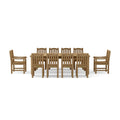
Premium teak is a natural fit for resort-inspired outdoor spaces. Its dense grain and natural oils help it stand up to moisture, while its substantial look gives a pool deck a sense of permanence. Teak works especially well for chaise lounges, deep seating, dining tables, and accent benches because it balances tailored design with an inviting, organic feel.
It does require a choice: maintain its warm golden-brown color with periodic care, or allow it to develop a silvery gray patina over time. Neither path is wrong. The better option depends on whether you prefer a freshly finished look or a softer, weathered character that settles naturally into the landscape.
Aluminum keeps the look light and low-maintenance
Powder-coated aluminum is a smart choice when you want clean lines, easier rearranging, and minimal upkeep. It will not rust like untreated steel, and quality frames stay comfortable to move when you are adjusting a layout for guests. Aluminum is especially useful for stackable loungers, dining chairs, and modular seating.
In full sun, dark metal surfaces can become hot to the touch. Cushions, breathable sling fabrics, and strategically placed shade help solve that problem without sacrificing the crisp, contemporary profile many homeowners want.
All-weather wicker adds texture, with one caveat
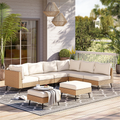
High-quality resin wicker can soften hardscape-heavy pool areas and bring a relaxed, welcoming feel to a seating group. Look for UV-resistant, high-density woven material over a sturdy frame rather than lightweight pieces that can fade, crack, or sag over a few seasons.
Wicker is often best used in a covered lounge area rather than directly at the waterline. It is durable, but it has more texture to clean than a simple metal or teak frame. If your pool area sees lots of sunscreen, snacks, and children coming in from the water, a smooth-frame lounger may be the more practical choice.
Cushions should earn their place
Outdoor cushions are where a poolside arrangement becomes genuinely comfortable. They should also be ready for the realities of summer. Choose performance fabrics designed to resist fading and moisture, with cushions that drain and dry efficiently after a splash or passing storm.
Pale upholstery looks fresh beside blue water and natural stone, but it will show sunscreen and spills more readily. Charcoal, sand, muted green, and warm taupe are often forgiving alternatives that still feel elevated. Removable covers make seasonal care much simpler.
Create a Layout That Invites People to Stay
Rows of identical loungers can feel orderly, but they rarely create the relaxed atmosphere people remember. Mix the experience instead. Pair a few adjustable chaise lounges with a small side table for solo relaxation. Add a deeper seating arrangement nearby for conversation. If the pool is a gathering place, include enough surfaces for drinks, towels, books, and serving trays.
A low table between loungers is not a minor detail. It means nobody has to place a cold drink on the ground or get up every time they need sunscreen. In a lounge area, a substantial coffee table or pair of nesting tables gives the setting a finished, hosted feel.
For smaller decks, choose pieces that work harder. Two chaises with a shared table may provide more usable comfort than four tightly packed loungers. A compact bistro set can turn an unused corner into a morning escape. A bench along a wall or planter edge offers flexible seating without consuming the center of the deck.
For larger pools, use furniture to make the scale feel intentional. A generous sectional under a pergola, gazebo, or canopy can anchor the entertaining zone and add welcome shade. Across the deck, a pair of teak loungers creates a quieter destination. These groupings give the eye a place to rest while allowing guests to choose how they want to spend the afternoon.
Shade Is Part of the Furniture Plan
Even the most comfortable chaise lounge has limits under midday sun. Shade is not an accessory to consider after furnishing the poolside. It is one of the foundations of a space people will use consistently.
Umbrellas offer flexibility and work beautifully over a pair of loungers or a dining table. Make sure the base is properly weighted for local wind conditions, and consider a cantilever design when you want broad coverage without a center pole interrupting the seating arrangement.
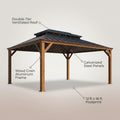
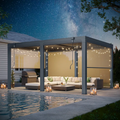
For a more defined outdoor room, a pergola or gazebo adds architectural presence along with dependable cover. It can frame an outdoor sectional, dining table, or swing bed while creating separation between the pool and the rest of the yard. Adjustable louvers, privacy panels, and curtains can make a covered area more adaptable as the sun shifts or an evening breeze picks up.
The right shelter also gives cushions and finishes a little more protection, extending the polished look of the space between cleanings. It is a design decision that pays off in comfort and seasonal durability.
Keep the Look Cohesive, Not Overmatched
A resort-inspired poolside does not need every piece to match. In fact, too many matching sets can make an outdoor area feel staged. Aim for a shared material, color family, or design language instead.
For example, teak loungers can sit naturally beside a neutral aluminum sectional if the cushions share a warm sand or linen tone. Black frames can connect an umbrella, dining set, and pergola. Natural stone, wood, woven textures, and subdued fabrics create depth without competing with the water, which should remain the visual focal point.
Be mindful of scale. Oversized, plush furniture can be wonderful under a covered structure, but it may overwhelm a narrow deck. Slimmer silhouettes preserve sightlines and make a compact pool area feel more open. Conversely, a large open patio needs furniture with enough presence to avoid looking scattered or temporary.
Plan for Care Without Making It a Chore
Premium outdoor furniture is built to last every season, but a few simple habits protect the investment. Rinse away pool chemicals and salt residue periodically, especially around chair legs and hardware. Wipe spills before they settle into fabric, and brush off leaves and debris that can trap moisture.
Use fitted covers during extended periods of nonuse, but avoid sealing damp cushions under a cover. In areas with harsh winters, storing cushions in a dry location helps preserve their shape and finish. Teak and metal frames can usually remain outdoors with appropriate seasonal care, though local weather should guide the decision.
The point is not to spend your weekends maintaining the patio. It is to choose well-made materials, give them basic attention, and enjoy the confidence that your outdoor space is ready for company.
A pool is already an invitation to slow down. Give it furniture worthy of that invitation: a place for the towel, the conversation, the last glass of wine, and the quiet moment when everyone else has gone inside.