Outdoor Furniture Scale Guide for Better Patios
Share
A patio can have beautiful materials, a well-built pergola, and premium furniture, yet still feel strangely uncomfortable. Often, the issue is scale. A dining set that overwhelms the terrace, a petite conversation set floating on a large pool deck, or loungers squeezed too close to the water can make an outdoor space feel more like an obstacle course than a private retreat.
This outdoor furniture scale guide helps you plan for the way you want to live outside. The goal is not to fill every open foot of concrete, pavers, or decking. It is to create a setting with enough presence for the space, enough clearance for guests, and enough comfort to make an ordinary evening feel like a getaway.
Start With Movement, Not Furniture
Before choosing a sectional or dining table, think about the paths people take through your yard. Where do guests enter from the house? How do they reach the grill, pool, garden, or fire pit? Where will someone set down a tray of drinks? Those everyday movements should remain easy once the furniture is in place.
As a useful starting point, leave about 30 to 36 inches for primary walkways. A tighter 18- to 24-inch passage can work along the side of a seating area that is used less often, but it will feel cramped as a main route. Around a dining table, plan for at least 36 inches from the table edge to a wall, railing, planter, or other obstruction. If chairs need to slide back while someone walks behind them, 48 inches is more comfortable.
These measurements are not design rules meant to make a patio feel rigid. They protect the relaxed, hospitable feeling that makes outdoor living worth investing in. A generous pathway lets a host move naturally through a dinner party, and it keeps a family room outdoors from feeling crowded on a quiet Sunday morning.
Match the Furniture Footprint to the Outdoor Room
Furniture should feel anchored, not stranded. The right scale depends on the dimensions of the area, but also on whether the space has visual boundaries. A covered porch, gazebo, pergola, or low garden wall creates a defined outdoor room. An open lawn-side patio or expansive pool deck needs furniture with more visual weight to feel intentional.
Small patios and balconies
On a compact patio, select pieces that earn their footprint. A 36- to 42-inch round dining table typically seats four while keeping corners clear. For conversation, two lounge chairs with a small table between them may be more inviting than forcing in a full sofa. Armless chairs, slim frames, and nesting side tables help preserve visual breathing room without making the space feel sparse.
Avoid the temptation to choose tiny furniture simply because the patio is small. Undersized pieces can look temporary and provide little real comfort. One well-proportioned loveseat or a pair of substantial club chairs often works better than four narrow chairs packed tightly together.
Mid-size patios and decks
A medium outdoor area has room for distinct functions, but it still needs a clear hierarchy. A sectional or sofa grouping can establish the primary lounge zone, while a dining set sits nearby if pathways stay open. For many patios, a 72- to 84-inch dining table is a comfortable choice for six people. A rectangular table suits long, narrow spaces; a round table softens a square patio and keeps conversation easy.
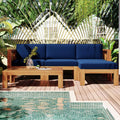
When adding a sectional, remember that its footprint includes the coffee table and circulation around it. A low coffee table should generally sit 16 to 18 inches from the sofa or chairs. That distance is close enough for a drink, but far enough for guests to settle in comfortably.
Large decks, pool surrounds, and open backyards
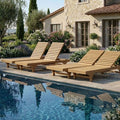
Large spaces can absorb generous furniture, and they usually need it. An 11-foot sectional may look perfectly balanced on a broad deck where a standard sofa would disappear. Near a pool, pairs of chaise loungers and side tables create a resort-style rhythm, while a substantial teak dining set gives a larger entertaining area a true destination.
The trade-off is that large furniture needs a plan. Do not spread pieces evenly around the perimeter just because there is room. Create purposeful zones: a dining area close to the kitchen, a lounge area with shade, and a fire feature surrounded by seating. Each zone should have enough scale to read as its own gathering place.
Use Rugs and Structures to Check Proportion
An outdoor rug is one of the fastest ways to test whether a seating group is sized correctly. In a conversation area, the rug should ideally accommodate at least the front legs of every major seat. If the rug is too small, the furniture can look disconnected. If it extends far beyond the grouping, it may make the seating feel undersized.
For dining, allow the rug to extend about 24 inches beyond the table on all sides. This gives chairs room to slide out without catching on the edge. On a 72-inch rectangular table, that often means an 8-by-10-foot rug is a practical minimum, while a larger setting may call for 9-by-12.
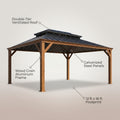
Shade structures also affect perceived scale. A dining set that feels proportionate in open sun may look undersized beneath an oversized gazebo. As a general planning principle, the furniture grouping should fill the sheltered area with intention while leaving room around the edges for circulation, curtains, or planters. Under a pergola, align the table or sectional with the structure rather than placing it at an awkward angle. The architecture and furniture will feel designed together.
Choose Table Heights for the Way You Gather
Scale is more than width and length. Height determines how a space functions. Standard dining tables, usually around 28 to 30 inches high, are the natural choice for full meals and long dinners. Counter-height tables, commonly 34 to 36 inches, bring a more casual, social energy and can offer a better view over railings. They work especially well near outdoor kitchens or on decks with an open outlook.
Deep seating paired with a low coffee table is made for lingering. It is ideal for cocktails, conversation, and evenings around a fire pit, but it is not the most comfortable setup for a plated meal. If your patio must serve both purposes, consider a dining area for meals and a separate lounge zone for unwinding. Trying to make one small group do everything is where scale and comfort often break down.
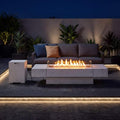
Fire pits deserve their own clearance. Keep enough room for chairs to sit back from the heat, and do not crowd the surrounding seats. A fire feature can be the visual center of a patio, but people should be able to move around it without brushing against hot surfaces or interrupting a conversation.
Consider Visual Weight Along With Measurements
Two sofas with the same dimensions can look entirely different. A low-profile aluminum frame with open legs has a lighter visual presence than a deep, solid teak sofa with wide arms. Dark finishes tend to feel more substantial; pale materials and open-weave designs read lighter. Thick cushions add comfort and a more luxurious silhouette, but they also increase the apparent scale of the piece.
This is where material choice can solve a proportion problem. On a compact terrace, refined teak chairs with open sides may deliver warmth without creating heaviness. On a large stone patio, a deep-cushion sectional or substantial dining collection can keep the space from feeling bare. If you live in a windy or sun-intense climate, durable materials and weightier frames also offer practical benefits beyond appearance.
A Simple Outdoor Furniture Scale Guide Before You Buy
Measure the usable area, not just the full patio dimensions. Exclude grill clearances, doors that swing out, stair landings, planters, and any route that must remain open. Then use painter's tape, cardboard, or even outdoor cushions to mark the dimensions of the furniture you are considering. Walk through the outline, pull out an imaginary dining chair, and picture carrying a platter from the kitchen.
Pay close attention to doors. A beautiful sectional is not a good fit if it blocks the path from the house, and a dining chair should never land where a sliding door opens. For large pieces, verify delivery access too: gate width, side-yard turns, stairs, elevators, and the route from curb to patio all matter.
Finally, plan for the number of people you host most often, not only the maximum number you could fit once a year. A comfortable six-seat setting used every weekend is more valuable than an eight-seat arrangement that feels compressed all season.
The most welcoming patios have a sense of ease. When furniture is scaled with care, the room feels generous without being empty, polished without being precious, and ready for everything from coffee at sunrise to a dinner that stretches long after sunset. That is the kind of outdoor retreat Oasis Patio Direct believes is worth lingering in.