How to Choose Outdoor Kitchen Cabinets That Last
Last Updated: November 8, 2026
Quick Summary
Look for outdoor kitchen cabinets built with sealed construction, corrosion-resistant hardware, and materials that do not absorb water, matched to your sun, rain, and salt exposure. Verify the stainless steel grade in writing, since 304 resists corrosion better than 430-grade. Check drawer slides, latches, fasteners, and a raised base before buying.
- Measure your space, weather exposure, and cooking workflow before shopping for cabinets.
- 304 stainless steel contains nickel for strong corrosion resistance in coastal and humid conditions.
- Stainless panels joined with plain zinc or galvanized screws corrode at the fastener first.
- Cabinet sizes must follow appliance cutout dimensions, not the other way around.
- Compare warranty exclusions line by line rather than the headline term.
Table of Contents
- Start With Your Climate and Layout Before You Shop
- The Best Material for Outdoor Kitchen Cabinets
- What Makes Cabinets Weatherproof Outdoor Kitchen Cabinets
- Construction Details and Hardware That Decide Lifespan
- Outdoor Kitchen Cabinet Sizes and Appliance Cutouts
- Outdoor Kitchen Cabinet Maintenance and Total Cost of Ownership
- Warranty, Certifications, and Seller Due Diligence
- Build Your Cabinet Plan With Oasis Patio Direct
- Frequently Asked Questions
Start With Your Climate and Layout Before You Shop
The first thing to look for when buying outdoor kitchen cabinets is not a material or a brand. It is your own backyard. Sun exposure, rainfall, salt air, and the space you actually have decide which cabinets will survive and which will fail within a few seasons. A cabinet that performs well on a shaded, covered patio can break down quickly on an exposed, south-facing wall.
Below, we walk through exactly what separates cabinets that last a decade from ones that look tired after two summers.
Start with three measurements and one observation:
- Available space: measure the full run, wall height, and depth you can spare without blocking walkways.
- Weather exposure: note how many hours of direct sun the spot gets and whether the area stays covered.
- Cooking workflow: mark where the grill sits, where prep happens, and where guests gather.
A modular cabinet layout works best for most yards because you can add pieces as the design evolves. A built-in kitchen suits homeowners who want a permanent, seamless look. Neither works if you skip the measurements first.
Match Materials to Sun, Rain, and Salt Air
Climate drives material choice more than anything else. In intense sun and heat, fading and warping are the real threats, so look for finishes and cores rated for UV exposure. In wet, humid regions, moisture resistance and drainage matter most. Near the coast, salt air attacks metal fasteners and lower-grade steel first.
Ask one direct question before you buy: which material does the seller recommend for my specific conditions? A confident, specific answer is a good sign. A generic "they all work fine" is not.
The Best Material for Outdoor Kitchen Cabinets
The best material for outdoor kitchen cabinets depends on exposure, budget, and how permanent the setup will be. Stainless steel wins on durability and easy-clean surfaces. HDPE handles moisture without rotting. Teak and hardwoods bring warmth but need upkeep. Masonry and concrete last longest but are fixed in place.
Here is how the main options compare:
| Material | Weather Resistance | Maintenance | Best For |
|---|---|---|---|
| 304 stainless steel | Excellent, resists rust and corrosion | Wipe-down | Coastal and humid yards |
| 430-grade stainless steel | Good, less corrosion resistance | Wipe-down, watch scratches | Covered, inland patios |
| HDPE | Excellent, no rot or swelling | Soap and water | Wet climates, budget builds |
| Teak and hardwoods | Good with oiling | Regular oiling | Covered spaces, warm look |
| Masonry and concrete | Excellent | Sealing, occasional repair | Permanent built-in kitchens |
For readers comparing components in depth, our guide to high quality outdoor kitchen components breaks down the details before you commit.
Stainless Steel Grades and Corrosion Resistance
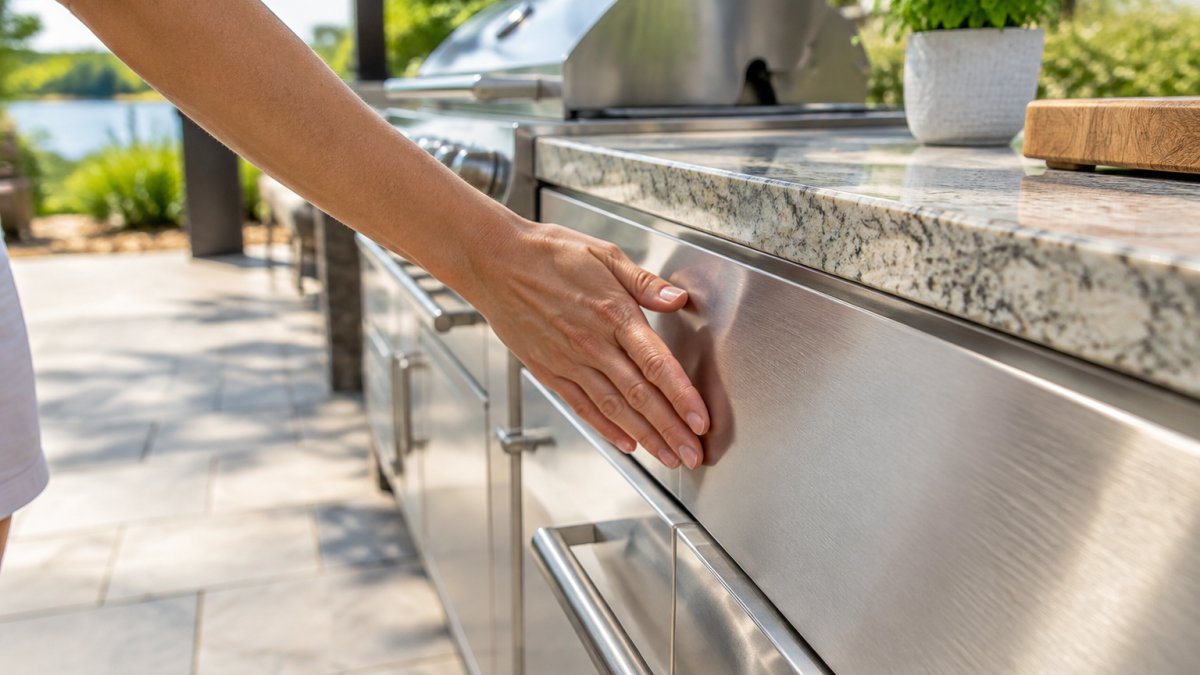
Not all stainless steel is equal, and the grade is the single most important spec to verify. 304 stainless steel contains nickel, which gives it strong corrosion resistance in coastal and humid conditions.
How to verify the grade: ask for the spec sheet in writing, check for a grade stamp on the metal, and confirm the seller states the grade in the product listing. If a listing just says "stainless steel" with no number, treat that as a warning sign.
What Makes Cabinets Weatherproof Outdoor Kitchen Cabinets
Weatherproof outdoor kitchen cabinets are built around three things: sealed construction, corrosion-resistant hardware, and materials that do not absorb water. Tight door and drawer seals keep moisture and debris out. Raised bases keep the cabinet off standing water. Quality hinges and glides resist rust and stay smooth.
Watch out: a cabinet rated "weather-resistant" can still fail if water pools against its base. Check that the design includes a raised plinth or adjustable feet.
Construction Details and Hardware That Decide Lifespan
Hardware is where budget cabinets reveal themselves, and it is the part of the spec sheet most buyers never read. Two cabinets can use the same 304 stainless-steel shell and still diverge sharply in year three because one has sealed, load-rated components and the other has commodity hinges that pit and seize. When you compare units side by side, inspect the components below rather than the marketing language.
Drawer slides. Full-extension, ball-bearing slides in stainless steel handle the weight of cast iron, stacked platters, and bulk propane accessories. Confirm the slide's load rating in writing and check whether it is full-extension (the drawer opens completely) or three-quarter extension (it does not). Soft-close slides reduce slam wear on the cabinet frame.
Latches and seals. Positive latches keep doors closed in wind, and gasketed or sealed doors keep driven rain and debris out. Look for a continuous seal or a gasket at the door perimeter rather than a single magnetic catch. A door that rattles in a storm is a door that lets water in.
Fasteners. This is the mixed-metal corrosion trap. Stainless cabinet panels joined with plain zinc or galvanized screws will corrode at the fastener first, especially near the coast. Ask whether fasteners are stainless and whether dissimilar metals are isolated to prevent galvanic corrosion.
Ventilation. Enclosed cabinets that house a refrigerator, trash pullout, or gas appliance need airflow so heat and moisture can escape. Look for vented panels or a designed air path, and confirm the cabinet does not trap propane or moisture in a sealed box.
Bases and feet. A raised plinth or adjustable stainless feet keep the cabinet off standing water and let you level the run on an uneven patio. Cabinets that sit flat on the slab wick ground moisture.
A good example is the Summerset 33" flush mount two soft-closing drawers and access door combo, which features soft-closing drawers and an access door. For a different drawer configuration, the Summerset 33-inch stainless steel flush mount triple drawer and access door combo adds a third drawer.


Watch out: a cabinet can pass a visual inspection and still fail at the fasteners, so ask for the fastener spec in writing before you buy.
Outdoor Kitchen Cabinet Sizes and Appliance Cutouts
Cabinet sizes must follow the appliance cutout dimensions, not the other way around. Measure your grill, side burner, refrigerator, and sink first, then confirm the cabinet's cutout sizes match.
Plan the utility runs early:
- Gas connections: confirm the line location before finalizing cabinet placement.
- Electrical connections: plan outlets for lights, rotisserie motors, and refrigerators.
- Plumbing: route sink drains and supply lines with slope in mind.
If you are still choosing appliances, our roundup of outdoor kitchen appliances for hot weather helps match units to cabinet cutouts.
Outdoor Kitchen Cabinet Maintenance and Total Cost of Ownership
Outdoor kitchen cabinet maintenance is simple but not optional, and the total cost of ownership depends on material and climate. Stainless steel needs periodic wipe-downs and a check for scratches that can harbor corrosion. HDPE needs soap and water. Hardwoods need re-oiling. Masonry needs sealing.
Budget for the full picture, not just the purchase price:
- Purchase cost: the cabinet units themselves.
- Installation: site prep, footings, and utility hookups.
- Maintenance: oils, sealers, and replacement hardware over time.
- Replacement: cheaper materials often cost more across a decade.
A common mistake is buying on sticker price alone. A cabinet that needs replacing in five years can cost more than one that lasts fifteen.
Warranty, Certifications, and Seller Due Diligence
A warranty is only as good as its exclusions and the seller behind it. Most outdoor cabinet warranties run for a stated term on the structure and a shorter term on the finish and hardware, and the difference between a strong and weak warranty is usually in what is excluded rather than what is promised. Read the document before you buy, not after something fails.
What to confirm in the warranty:
- Term by component. Structural coverage, finish coverage, and hardware coverage often run different lengths. Ask for each in writing.
- Exclusions. Coastal salt exposure, chemical cleaners, improper installation, and acts of nature are commonly excluded. If you live near salt water, confirm whether coastal use voids the finish warranty.
- Remedy. Does the manufacturer repair, replace the part, or replace the whole unit? Part-only coverage still leaves you paying labor.
- Transferability. A transferable warranty helps resale value; a non-transferable one does not.
- Claims process. Confirm who you contact, what proof is required, and typical response time.
Replacement-part availability. Cabinets last only as long as their hinges, slides, and seals can be replaced. Ask whether the seller stocks or can order replacement hardware and how long the model's parts will be supported. A cabinet with proprietary hardware and no parts channel becomes disposable when one hinge fails.
Documentation to request before purchase:
- Written spec sheet confirming stainless steel grade and fastener material
- Warranty document with component terms and exclusions
- Confirmation of cutout dimensions for your specific appliances
- Return policy and delivery terms in writing
- Answers to climate-specific questions from the seller
- Replacement-part and service-contact information
Seller due diligence. A seller who answers technical questions specifically, grade, gauge, fastener type, seal design, is a better long-term partner than one who answers generically. Confirm the seller's return window, freight-damage policy, and whether they provide installation guidance. For a built-in installation, ask whether the seller can connect you with qualified installers or provide anchoring and drainage guidance.
Certifications and standards. Ask whether the cabinet or its components carry any relevant third-party listings, and confirm that any gas or electrical components are listed for outdoor use by a recognized testing organization. A listing mark on a gas component is not a formality; it is evidence the part was tested for the application.
Watch out: a long warranty term can mask narrow coverage, so compare the exclusions line by line rather than the headline number.
Build Your Cabinet Plan With Oasis Patio Direct
The right cabinets come down to matching material and construction to your climate, layout, and appliances. Get those three aligned and the rest of the decision gets simple.
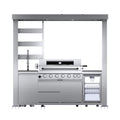
Oasis Patio Direct helps homeowners turn a bare patio into a resort-style retreat with weather-resistant materials and straightforward assembly. Our collection spans outdoor kitchens, pergolas, and patio furniture. Orders over $100 ship free, and a 30-day risk-free trial is available. When you are ready to build the full plan, our Valmont 43-inch grill island with granite countertops, cabinets, and sink shows how a complete station comes together.

Your yard deserves cabinets that still look sharp after a decade of sun and rain. Start with climate and layout, verify the steel grade and hardware, then build the plan around your appliances. Explore the collection at Oasis Patio Direct and create an outdoor kitchen built to last.
Frequently Asked Questions
What should I look for in outdoor kitchen cabinet construction?
Check the steel grade first. Look for 304 stainless steel, which offers strong corrosion resistance in humid and coastal conditions.
Are stainless steel cabinets good for outdoor kitchens?
Yes, when the grade is right. 304 stainless steel offers strong corrosion resistance in humid and coastal conditions. The Summerset 33-inch flush mount drawer and access door combo, for example, uses 304 stainless steel with soft-closing drawers.
How do I choose the right size outdoor kitchen cabinets?
Start with your appliances, not the cabinets. Note the cutout dimensions for your grill, side burner, and any outdoor refrigerator, then plan cabinet runs around those openings. Measure your appliances and plan cabinet runs around those cutout dimensions.
How do you maintain outdoor kitchen cabinets?
Wipe stainless surfaces with warm water and a mild dish soap, then dry with a soft cloth to prevent water spots. Avoid abrasive pads and chlorine-based cleaners, which can pit the finish. Rinse off salt spray or pollen buildup monthly during heavy seasons, and check seals and glides twice a year. A quick rinse after coastal storms and a light application of stainless polish keeps weatherproof outdoor kitchen cabinets looking new for years.