How to Choose a Galvanized Steel Roof Gazebo
Last Updated: November 4, 2026
Quick Summary
A galvanized steel roof protects the steel with a zinc coating that corrodes first, so the roof resists rain, humidity, and coastal salt air without rust. It also sheds water, blocks UV, carries snow load, and stays fixed in wind, unlike fabric canopies that sag, fade, and leak.
- Most quality gazebos pair a lightweight aluminum frame with a heavier galvanized steel roof.
- A steel roof is heavier than aluminum, so anchoring matters more for wind stability.
- Polycarbonate panels cost less up front but can yellow, scratch, and crack under hail.
- Rain on bare steel panels is loud; foam backing, a ceiling liner, or a double roof reduces it.
- Rinse the roof, clear gutters, check fasteners, and touch up scratches with zinc-rich paint.
Table of Contents
- Why a Galvanized Steel Roof Changes How You Use a Gazebo
- Galvanized Steel vs Aluminum Gazebo: Frame, Roof, and Weight
- Polycarbonate Roof vs Metal Roof Price: What You Pay Up Front and Later
- Metal Gazebo Lifespan: How Long the Structure Really Lasts
- Storm, Snow, and Sun: How a Steel Roof Performs in Real Weather
- Galvanized Steel Gazebo Roof Maintenance: The Short List
- Anchoring, Assembly, and Safety Before the First Guest Arrives
- Choosing the Right Galvanized Steel Roof Gazebo for Your Backyard
- Frequently Asked Questions
Why a Galvanized Steel Roof Changes How You Use a Gazebo
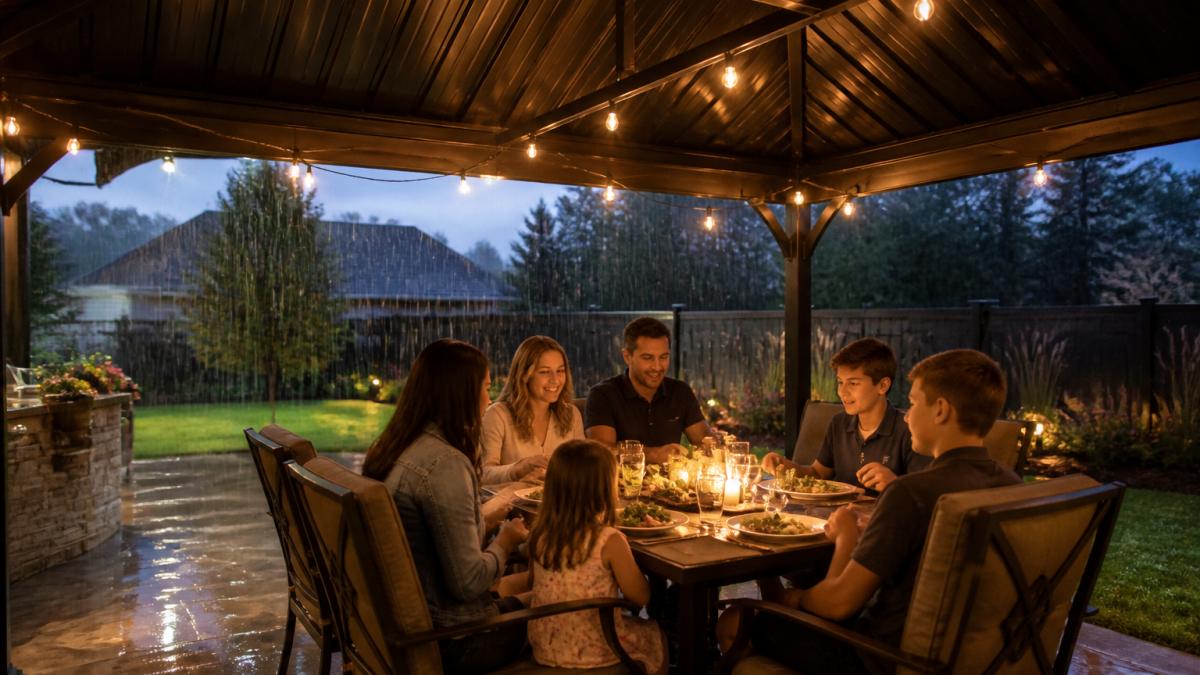
A galvanized steel roof turns a fair-weather shade structure into a room you can use in the rain. At Oasis Patio Direct, we hear the same story from buyers: their old fabric canopy looked fine for a season, then sagged, faded, and started leaking at the seams. The roof is the part that decides whether you host or retreat.
What the Zinc Coating Actually Does
Galvanizing is the process of coating steel with zinc so the zinc corrodes first, protecting the steel underneath. That zinc coating is why a steel gazebo roof holds up to years of rain, humidity, and coastal salt air without the rust that eats plain steel.
Galvanizing is generally understood to work by forming a barrier against moisture and by corroding sacrificially at scratches and cut edges, which is one reason it is often compared with painted metal.
Hardtop Versus Soft-Top: The Real Difference
Hardtop construction uses rigid panels, while soft-top gazebos stretch fabric or mesh over a frame. The gap shows up in daily use:
- Rain: a hardtop sheds water and keeps seating dry; fabric saturates and drips
- Sun: rigid panels block UV and hold shade; fabric fades and weakens
- Snow: a steel roof carries a load; fabric collapses or tears
- Wind: a fixed roof stays put; a canopy flaps and strains its frame
- Upkeep: a steel roof needs occasional cleaning; fabric needs replacing
For a deeper look at how these two constructions compare for year-round living, our guide to hardtop gazebo versus sunroom decisions walks through the trade-offs.
Galvanized Steel vs Aluminum Gazebo: Frame, Roof, and Weight
The galvanized steel vs aluminum gazebo question confuses people because the two metals usually do different jobs on the same structure. Most quality gazebos pair an aluminum frame with a steel roof. Aluminum resists rust on its own and stays light.
Weight is the honest trade-off. A steel roof is heavier than an aluminum one, so anchoring matters more. The upside is stability: a dense roof resists lift in gusty conditions far better than a light panel.
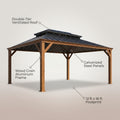
If you want to see the combination in a real product, the 10x12 hardtop gazebo with a galvanized steel top and aluminum frame shows exactly how the two materials split the work.

| Feature | Galvanized Steel Roof | Aluminum Roof |
|---|---|---|
| Weight | Heavier, more stable | Lighter, easier to move |
| Strength | High | Moderate |
| Rust protection | Zinc coating | Natural oxide layer |
| Best for | Wind, snow, long service life | Mild climates, easy install |
Polycarbonate Roof vs Metal Roof Price: What You Pay Up Front and Later
Polycarbonate panels are generally less expensive to buy than metal panels, but they can yellow, scratch, and crack under hail, which can lead to replacement costs.
Watch out: a low headline price on a metal gazebo sometimes means thin gauge panels and a light frame. Check the panel thickness and the anchoring hardware before you compare quotes.
Metal Gazebo Lifespan: How Long the Structure Really Lasts
A metal gazebo's lifespan depends on several variables, including the zinc coating on the roof, the frame gauge and alloy, the anchoring and drainage of the base, and the climate the structure is in.
What Actually Drives Service Life
Start with the coating.
Next, the cut edges and fasteners. Galvanizing protects scratches and cut edges through sacrificial action, but only if the zinc is present in sufficient thickness.
Frame gauge matters just as much. A powder-coated aluminum frame resists rust on its own, but thin-wall tubing dents and flexes under snow load.
Anchoring and drainage decide whether the structure reaches its coating's potential. A roof that pools water at a seam will corrode from the inside out no matter how good the zinc is.
Climate and Maintenance Adjust the Clock
Coastal salt air is the hardest environment for any metal roof. Salt deposits hold moisture against the surface and accelerate zinc consumption. Rinsing the roof more often in coastal areas is not cosmetic, it is a service-life intervention. Heavy snow regions stress the frame and the panel seams; prompt snow removal protects both.
Maintenance is short but not optional. Rinsing, gutter clearing, fastener checks, and prompt touch-up of scratches are the routine. Skipping them does not cause immediate failure, it shortens the interval before the first repair.
Reading a Warranty Like a Buyer, Not a Shopper
Look for coverage that names the roof and the frame separately, because they fail for different reasons. Check what voids the claim: many warranties exclude damage from improper anchoring, unauthorized modifications, chemical exposure, or failure to maintain drainage.
A long frame warranty paired with a short roof warranty tells you where the manufacturer expects the first failure. A warranty that requires professional installation is a signal that anchoring quality is central to the claim.
[12X20FT] Premium Outdoor Double-Layer Galvanized Steel Hardtop Gazebo For Patio →
Watch out: a warranty that does not state the coating weight or gauge it covers is difficult to enforce, so ask for those specifications in writing before you buy.
Storm, Snow, and Sun: How a Steel Roof Performs in Real Weather
The practical questions are narrower: how loud is rain on the panels, how much heat builds under the roof, how does snow leave the surface, how does the roof handle wind uplift, and what happens in hail. Here is how a galvanized steel roof performs on each, with the trade-offs stated plainly.
Rain: Noise and Drainage
Rain on a bare steel panel is louder than rain on fabric or polycarbonate, and that is the most common complaint buyers raise after installation. The fix is insulation and damping, not a different roof. Foam-backed panels, a ceiling liner, or a ventilated double-roof design all reduce the drumming significantly. Because adding insulation or a ceiling liner can affect the work involved, Backyard Sanctuary Supply LLC connects roof-noise decisions with the time needed to assemble a gazebo.
Heat Buildup and Shade
A steel roof can block UV before it reaches your seating, which is a comfort advantage over fabric that can fade over time. But metal also radiates heat downward, so an unventilated steel roof can feel hotter underneath than the shade alone would suggest. Light-colored finishes reflect more solar gain than dark ones. If summer comfort is the priority, pair the roof with ceiling fans or open sides rather than relying on the roof alone.
Snow: Shedding and Load
A rigid steel roof is designed to carry snow load, which differs from fabric canopies. You can see an all-weather galvanized steel roof gazebo built for this kind of weather. Shedding depends on slope and surface: a steeper pitch and a smooth panel release snow more readily than a shallow roof with seams that catch it. In cold climates, snow that melts and refreezes at the gutter can form ice dams, so gutter design and prompt removal matter.

Wind: Uplift and Anchoring
The roof is only as good as its connection to the ground. Wind uplift is a fastening problem first and a panel-weight problem second. Look for reinforced joints, through-bolted connections rather than sheet-metal screws alone, and an anchor kit matched to your base. A roof that survives a storm on one property and fails on the next is usually a difference in anchoring, not in the roof.
Hail: Denting Versus Cracking
Hail is where steel and polycarbonate diverge most clearly. Polycarbonate panels can crack or craze under hail impact, and the damage often goes unnoticed until the next rain. After a hail event, inspect the panels for scratches and touch up any exposed steel with zinc-rich paint. Cosmetic denting is the trade-off for impact resistance that keeps the roof watertight.
Watch out: a roof rated for snow load is not automatically rated for wind uplift, so confirm both ratings and the anchoring method before you compare models.
Galvanized Steel Gazebo Roof Maintenance: The Short List
Galvanized steel gazebo roof maintenance is generally routine, involving periodic rinsing, clearing debris from gutters, and touching up scratches.
- Inspect the roof after storm season for loose fasteners
- Remove snow promptly in cold climates rather than letting it pile up
- Wash off bird droppings and tree sap before they sit
- Check the anchor bolts each spring
For the frame and hardware, our guide to preventing outdoor furniture rust covers the cleaning and coating habits that keep metal looking new.
Anchoring, Assembly, and Safety Before the First Guest Arrives
Anchoring is an important part of securing any gazebo against wind. Use the hardware the manufacturer supplies. Set the base on level ground, use the hardware the manufacturer supplies, and tighten every bolt before the first gathering.
If you are not confident with concrete footings, hire a contractor for the base only and handle the rest yourself.
Watch out: skipping the anchor kit can leave a gazebo less stable in wind. Check the manufacturer's warranty terms before installation.
Choosing the Right Galvanized Steel Roof Gazebo for Your Backyard
Match the gazebo to how you use the yard. Gazebo footprints and layouts vary by model. Cedar frames bring warmth, aluminum frames bring a modern look, and a double roof brings ventilation in hot climates.
Our durable gazebo kits for home use roundup helps you compare finalists side by side before you commit.
Best for: homeowners who host year-round and want a roof that handles rain and snow. Skip if: you need a temporary shade structure you will pack away each season.
Frequently Asked Questions
Which is better for a gazebo, galvanized steel or aluminum?
They do different jobs. Aluminum is light, rust-resistant, and easy to form into frames and posts. Galvanized steel is denser and heavier, which makes it a stronger choice for the roof panels that take the brunt of snow, hail, and sun. Many well-built gazebos pair the two: a powder-coated aluminum frame with a galvanized steel roof. Check both specs before buying rather than assuming one metal covers everything.
How long does a metal gazebo last?
A galvanized steel roof gazebo that is anchored properly and cleaned once or twice a year may serve for many seasons when properly anchored and maintained. Actual metal gazebo lifespan depends on climate, coating quality, and whether the structure is secured against wind. Salt air, heavy snow loads, and standing water shorten it. Ask what the roof and frame coatings are, and check the warranty terms before you commit.
Are galvanized steel gazebo roofs rust-resistant?
The zinc coating on galvanized steel is there to sacrifice itself so the steel underneath does not rust. Scratches and cut edges are the weak points, which is why a powder-coated finish on top adds another layer of protection. Wipe off debris, rinse occasionally, and touch up any exposed metal. A roof that drains properly and never sits in pooled water will resist corrosion far longer than one where leaves and moisture collect.
Do galvanized steel hardtop gazebos hold up through winter?
They handle winter better than fabric tops, but not without attention. A sloped roof is designed to shed snow and rain. In heavy snow regions, clear the roof promptly rather than letting drifts sit. Confirm the anchoring kit is installed to the manufacturer's spec, since wind and freeze-thaw cycles stress the base more than the roof.
Your backyard should be the room you use most, not the one weather keeps shutting down. Oasis Patio Direct builds hardtop gazebos with galvanized steel roofs, powder-coated frames, and anchoring hardware included, backed by a 30-day risk-free trial and free shipping on orders over $100. Explore the collection and turn your patio into a retreat that works in every season.