How to Prevent Outdoor Furniture Rust
Table of Contents
- Understanding Metal Types and Corrosion Risk
- How to Prevent Outdoor Furniture Rust: Core Maintenance Steps
- How to Remove Rust from Metal Patio Furniture
- Best Clear Coat for Outdoor Metal Furniture
- How to Maintain Powder-Coated Furniture
- Climate-Specific Rust Prevention Strategies
- Using Lubricants and Storage to Block Oxidation
- Frequently Asked Questions
Last Updated: September 25, 2026
Understanding Metal Types and Corrosion Risk
Different metals rust at different speeds: aluminum resists corrosion naturally, steel rusts quickly without protection, stainless steel resists rust better but can still corrode in salt-air environments, and wrought iron is extremely vulnerable to rust and oxidation.

To prevent outdoor furniture rust, start by knowing your furniture's material. Check manufacturer tags or product documentation to understand how aggressive your maintenance needs to be.
Corrosion happens when metal meets oxygen and moisture. Salt air, high humidity, and temperature swings accelerate this process. Rust prevention blocks moisture and oxygen from reaching bare metal.
Powder-coated furniture has a factory-applied protective layer that shields the metal underneath. This coating is your first line of defense. Once it chips or scratches, bare metal is exposed and rust can start within weeks.
How to Prevent Outdoor Furniture Rust: Core Maintenance Steps
Preventing rust is far easier than removing it. A simple maintenance routine stops corrosion before it starts. Most people skip this and regret it when rust appears.
Step 1: Clean and Remove Debris Regularly
Dirt and debris trap moisture against metal surfaces. Clean your furniture every two weeks during warm months to prevent rust.
Use a soft brush or cloth with mild soap and water, drying completely. Pay attention to crevices and joints where water collects.
For stubborn grime, use a soft-bristled brush, never steel wool or abrasive scrubbers, which scratch the protective coating and expose bare metal.
Remove cushions and check underneath. Flip cushions regularly so air can circulate and prevent moisture from causing rust on the frame.
Step 2: Inspect for Early Damage
Damage to the protective coating is where rust begins. Catch small chips early to prevent rust entirely.
Look for white or gray powder (aluminum oxidation), orange or brown spots (iron rust forming), chipped paint, discoloration, or scratches. Run your hand along surfaces to feel for rough spots or raised areas, early warning signs. Mark problem areas for treatment.
Step 3: Apply Protective Coatings
A clear coat or topcoat is your main defense against rust, blocking moisture and oxygen from reaching bare metal. Apply it annually or after any damage.
For powder-coated furniture, a clear polyurethane topcoat adds extra protection, especially in high-humidity or salt-air climates.

Apply coatings on a dry day (50°F-85°F) with no rain in the forecast. Follow product instructions for drying time between coats.
Use a brush or roller for even coverage. One thin coat is better than one thick coat.
How to Remove Rust from Metal Patio Furniture
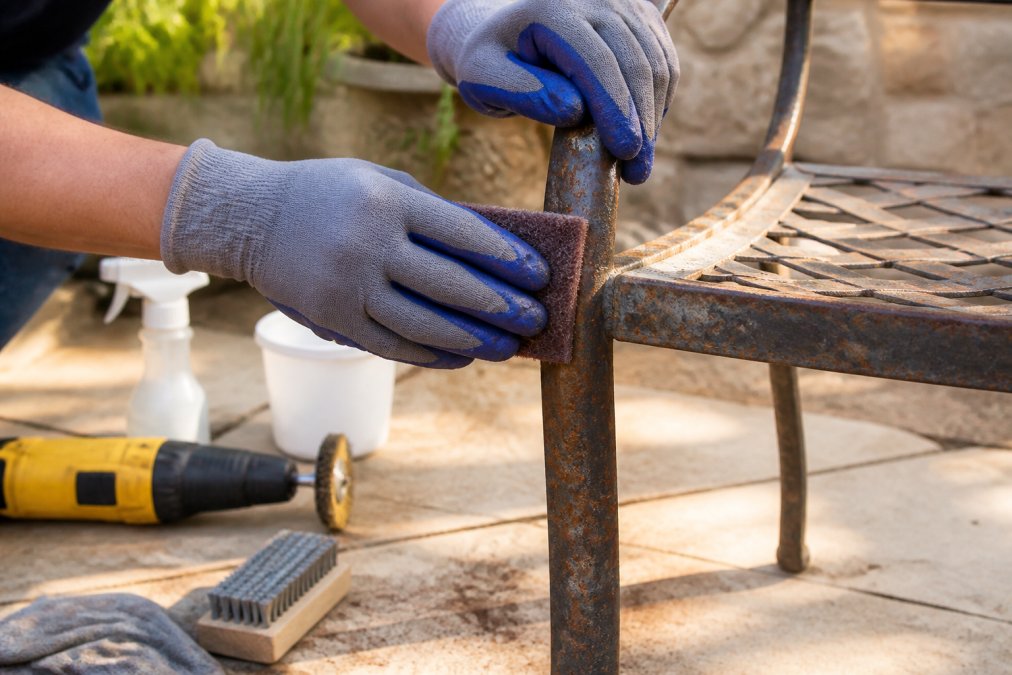
Rust that's already formed needs removal before you can protect the furniture. Small surface rust is easy to handle. Deep rust requires more aggressive treatment.
Sanding and Surface Preparation
Light surface rust comes off with fine-grit sandpaper (120-150 grit) sanded in the direction of the grain. For heavier rust, start with coarser sandpaper (80-100 grit) and work to finer grits to prevent gouging.
Sand in a well-ventilated area wearing a dust mask and gloves, rust particles are harmful to breathe.
After sanding, wipe the area clean with a damp cloth and let it dry completely, remaining dust or moisture will trap more rust underneath.
Rust Conversion and Touch-Up
Rust conversion products chemically treat stubborn surface rust. Apply according to instructions (most require 24-48 hours to cure). Once cured, apply a rust inhibitor or protective primer. For small scratches or chips, use touch-up paint in thin coats.
LeisureMod Chelsea Fire Pit Table →
Best Clear Coat for Outdoor Metal Furniture
A quality clear coat is essential for long-term rust prevention. Applying the wrong product can cause adhesion failure, yellowing, or accelerate corrosion underneath.
Clear Coat Compatibility by Metal Type
Aluminum Furniture: Aluminum requires a clear coat formulated for non-ferrous metals. Polyurethane topcoats work well because they bond to the oxide layer without requiring a primer. Avoid epoxy-based clear coats on bare aluminum, they trap moisture and cause white oxidation. If your aluminum has an existing powder coat, a polyurethane or polyester topcoat adds 2-3 years of additional protection.
Steel and Wrought Iron: Steel and wrought iron need rust-inhibiting primers before clear coating. Once primed, polyurethane or marine-grade sealants provide excellent protection. Acrylic clear coats alone are insufficient, they peel within months. For powder-coated steel, a polyurethane topcoat is recommended in salt-air or high-humidity environments.
Stainless Steel: Stainless steel rarely needs clear coating in most climates. In salt-air environments, a clear coat extends finish life. Use only clear coats labeled "stainless steel compatible" and test on a hidden area first. Marine-grade sealants designed for stainless are the safest choice.
Climate-Specific Clear Coat Selection
Salt-Air Climates: Marine-grade sealants with UV inhibitors and salt-resistance additives are essential. These cost 30-50% more but last 3-4 years instead of 2-3. Look for "marine-grade" or "salt-spray tested" labels. Standard polyurethane fails within 18 months in coastal environments.
High-Humidity Climates: Polyurethane topcoats with mildew inhibitors perform best. Standard polyurethane lacks mildew resistance. Acrylic clear coats absorb moisture and become sticky above 70% humidity. Reapply polyurethane annually in humid regions.
Hot, Dry Climates: UV degradation is the primary concern.
Application Rules to Prevent Failure
Clear coat failure usually results from applying over an incompatible surface. Never apply over dirt, peeling clear coat, bare steel without primer, or heavily chalked powder coating. Sand with 120-150 grit sandpaper and wipe with a tack cloth. Apply thin, even coats, thick applications sag and cure unevenly. Most clear coats require 24-48 hours between coats and 7 days full cure.
How to Maintain Powder-Coated Furniture
Powder coating is a factory-applied protective layer more durable than paint. Clean monthly with mild soap and water using a soft cloth, avoid abrasive scrubbers and harsh chemicals. Dry completely after cleaning. Touch up chips immediately with powder-coat touch-up paint. In salt-air environments, add a clear topcoat for extra protection. Use furniture pads to prevent chipping from rubbing against rough surfaces.
Climate-Specific Rust Prevention Strategies
Your climate determines how aggressive your rust prevention needs to be.
Using Lubricants and Storage to Block Oxidation
Lubricants protect moving metal parts from rust, but the wrong lubricant can damage protective coatings or attract dirt. Understanding lubricant compatibility with your furniture's finish is important.
Lubricant Types and Coating Compatibility
Silicone Spray: Silicone spray is easy to apply and dries quickly. It works well on hinges and metal-to-metal contact points but can interfere with future clear topcoat adhesion. On powder-coated furniture, apply only to moving parts and wipe away excess immediately. It's safe on bare metal, aluminum, and stainless steel.
Lubricant Application Best Practices
Apply lubricant only to moving parts: hinges, adjustment bolts, sliding mechanisms, and metal-to-metal contact points. Do not coat the entire furniture surface. Excess lubricant on powder-coated or painted surfaces attracts dust, creates a sticky feel, and can interfere with future coating applications.
Storage to Prevent Oxidation
Storage is more effective than any lubricant for preventing rust. Remove furniture from outdoor exposure during off-season when possible.
Climate-Specific Storage Guidance:
Frequently Asked Questions
What is the best way to prevent rust on outdoor metal furniture?
The most effective approach combines regular cleaning, protective coatings, and proper storage. Remove debris and moisture weekly, apply a clear coat or rust inhibitor annually, and store furniture under covers during off-season or in humid climates. For powder-coated pieces like those from Oasis Patio Direct, inspect the coating yearly and touch up any nicks immediately. Aluminum and stainless steel resist rust naturally but still benefit from protective sealants in salt-air or high-humidity environments.
Does clear coat stop rust on patio furniture?
Yes, a quality clear coat creates a moisture barrier that prevents oxidation and corrosion on metal surfaces. The best clear coats for outdoor furniture are polyurethane or acrylic-based formulas rated for UV protection and exterior use. Apply clear coat over bare metal or after rust removal and sanding. Reapply every 1-2 years, or sooner if you notice peeling, fading, or exposure of underlying metal. Clear coat works best as a preventative; it cannot stop rust already forming beneath the surface.
How often should you maintain outdoor furniture to prevent rust?
Inspect and clean furniture monthly, especially after rain or in humid climates. Deep cleaning and protective coating reapplication should happen annually or every 18 months, depending on climate and material. In high-salt-air environments or regions with frequent moisture, increase inspections to every 2 weeks. Powder-coated aluminum furniture requires less frequent maintenance but should still be checked yearly for coating damage. Store furniture indoors or under weatherproof covers during winter months or extended periods of non-use.
Can I use WD-40 or similar lubricants to prevent rust on outdoor furniture?
WD-40 and similar penetrating oils provide temporary moisture displacement and can protect metal joints and moving parts from rust. However, they are not permanent rust preventatives and wash away with rain. Use lubricants on hinges, bolts, and metal fasteners as part of routine maintenance, but rely on protective coatings like clear coat or rust inhibitor for long-term corrosion prevention. For best results, combine lubricants with regular cleaning and annual topcoat applications.