What Does Hiring a Contractor for Pergola Installation Cost?
Last Updated: October 25, 2026
Quick Summary
Pergola installation cost is the total a homeowner pays to have a pergola delivered, prepped, and built on site, including materials, labor, and site work. It breaks down into three buckets: the structure itself, site preparation, and labor, and labor and site work often rival the price of the pergola kit. Size, building materials, and site conditions move that number the most.
- A 10x10 pergola needs less framing, footing, and labor than a 12x16 pergola or larger.
- Every written bid should itemize structure, site prep, footings, labor, permits, equipment, cleanup, and warranty.
- Most straightforward pergola installations take one to three days, with site prep and curing time adding more.
- Ask for a current certificate of insurance showing both general liability and workers' compensation coverage.
- Tie payments to completed stages like footings poured and frame set rather than to calendar dates.
Table of Contents
- What Drives Pergola Installation Cost
- How to Read a Pergola Installation Estimate
- Questions to Ask a Pergola Contractor Before You Sign
- DIY Pergola Kit vs Contractor Installation
- How Long Pergola Installation Time Really Takes
- Permits, Property Checks, and Contract Terms
- Choosing Your Pergola and Installation Path
- Frequently Asked Questions
What Drives Pergola Installation Cost
Pergola installation cost breaks down into three buckets: the structure itself, site preparation, and labor. Most homeowners are surprised that labor and site work often rival the price of the pergola kit.
Pergola installation cost is the total a homeowner pays to have a pergola delivered, prepped, and built on site, including materials, labor, and site work.
Three factors move that number the most:
- Pergola size. A 10x10 pergola needs far less framing, footing, and labor than a 12x16 pergola or larger.
- Building materials. Cedar pergolas and aluminum pergolas price differently, and each has different labor demands.
- Site conditions. A level concrete pad is fast to work on. Sloped ground, old pavers to remove, or buried utilities add hours.
The FTC's guidance on home improvement contracts is worth reading before you sign anything, since it covers the consumer protections that apply to contractor agreements.
Size, Materials, and Site Conditions
Size drives material volume first. A 10x12 pergola uses more lumber or aluminum than a 10x10, and a 12x16 more still.
Materials change both kit price and labor profile. A wood pergola with a slatted roof takes more assembly time than a pre-engineered metal pergola with factory-cut parts.
Site preparation is the quiet cost driver. If you're weighing materials and features, our buyer's guide to aluminum pergolas walks through the trade-offs that affect both price and long-term durability.
How to Read a Pergola Installation Estimate
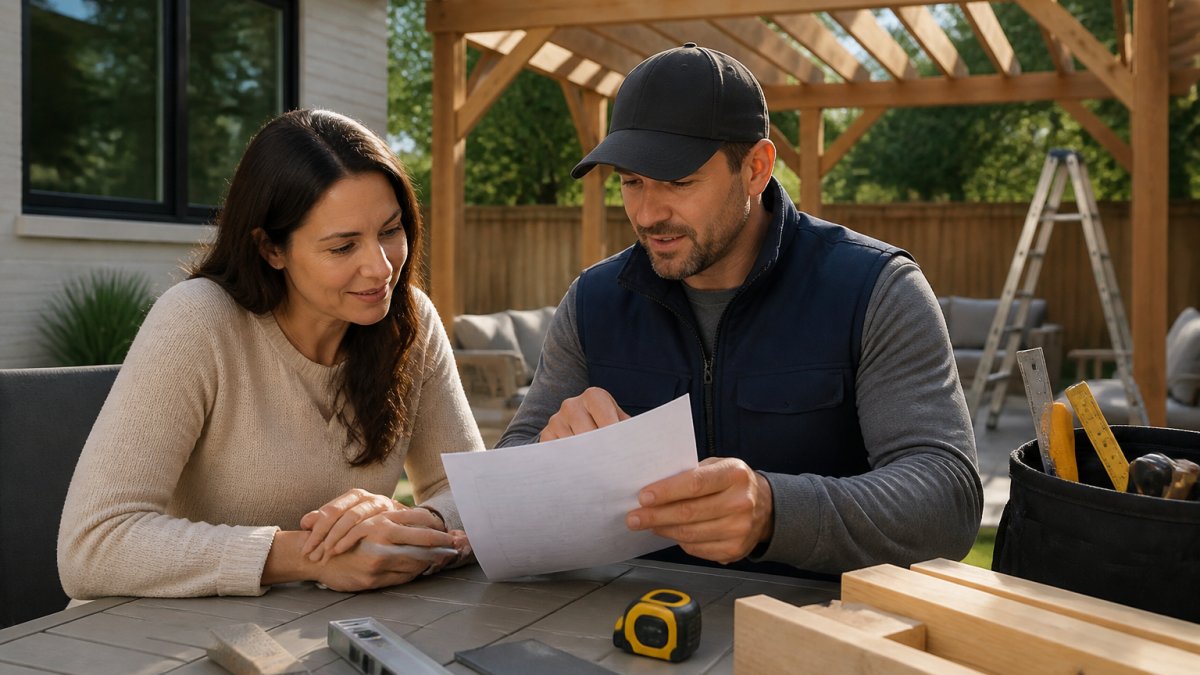
A good pergola installation estimate is itemized, not a single lump sum. If a contractor hands you one number with no breakdown, ask for a line-item version before comparing anything.
Line Items That Should Appear on Every Quote
Every written bid should separate these categories. Missing lines are where surprise charges hide.
| Line Item | What It Covers | Why It Matters |
|---|---|---|
| Structure/kit | Pergola materials or kit price, brand, model, and dimensions | Confirms what you're actually buying and whether bids cover the same product |
| Site prep | Demo, leveling, grading, concrete pad, or paver removal | Often the biggest variable between two bids |
| Footings & anchoring | Post bases, concrete mix, rebar, and hardware | Safety-critical; underspecified footings are a common corner-cut |
| Labor | Crew hours or flat installation fee, plus crew size | Compare hourly rate vs. flat fee and what triggers overage |
| Permits | Filing and inspection fees | Ask who pulls the permit and whether the fee is included or reimbursed |
| Equipment | Lift rental, auger, or disposal bin | Frequently omitted, then billed as an extra |
| Cleanup & disposal | Debris haul-away and site sweep | Often excluded from the base price |
| Warranty | Workmanship coverage terms and product warranty pass-through | Get it in writing, with duration and exclusions |
Use this as a checklist. A quote missing three or more rows deserves a follow-up question, not a signature.
How to Compare Two Bids on Equivalent Scope
Comparing bids is not about picking the lower total. Force both contractors onto the same scope so the price difference reflects a difference in work, not in what was left out.
A practical method:
- Fix the spec first. Write down size, material, roof style, attachment method (freestanding vs. attached), and finish before requesting bids. Give every contractor the same one-page spec.
- Ask each bidder to price the same line items from the table above, in the same order. Reject lump-sum bids or ask for a breakdown.
- Separate allowances from fixed prices. If a contractor writes "concrete pad: allowance," ask for the assumed square footage and thickness. An allowance is a placeholder, not a price.
- Identify exclusions explicitly. Ask each bidder to list what is not included, permits, disposal, electrical for lighting, painting or staining, and landscaping repair. Exclusions are where the cheap bid hides its cost.
- Normalize the labor basis. One bid may quote a flat installation fee; another may quote hourly with an estimated range. Convert both to an expected total and ask what triggers overage.
- Compare warranty terms side by side. A bid 10% higher with a two-year workmanship warranty and a pass-through product warranty may be the better value.
Red Flags in a Pergola Estimate
Some estimate patterns are worth walking away from, regardless of the total:
- A single lump sum with no line items. You cannot verify what you are paying for.
- No permit line and no answer about who pulls it. Unpermitted structures can complicate resale and insurance.
- Footings described only as "post bases" with no concrete or depth detail. Footing design depends on soil and frost depth; a vague line is a risk.
A quote should be readable line by line and defensible to a second bidder. If it cannot survive that test, ask for a rewrite before comparing totals.
Questions to Ask a Pergola Contractor Before You Sign
Ask about licensing, insurance, permits, timeline, and warranty before money changes hands. The answers separate a pergola builder who does this weekly from a general contractor squeezing in a side job, and knowing how to verify each answer matters as much as asking.
Licensing and Registration
Licensing rules vary by state and sometimes by municipality, some license general contractors, others require home improvement registration, and some rely on county or city registration. Ask directly:
- Are you licensed or registered for this type of work in my jurisdiction, and what is your license or registration number?
- Can you provide the number in writing so I can verify it with the issuing agency?
Then verify it. Most state licensing boards and many county or city agencies publish an online lookup to confirm the number, license status, and any complaints or disciplinary actions. A contractor who hesitates to give a number in writing is telling you something.
Insurance: General Liability and Workers' Compensation
Ask for a current certificate of insurance (COI) showing both general liability and workers' compensation coverage. Two checks matter:
- General liability protects you if the crew damages your home, fence, or a neighbor's property during installation.
- Workers' compensation matters if a worker is injured on your property. Without it, an injury can become your problem.
Have the insurer or agent send the COI directly, or call the agent's number on the certificate to confirm it is active. A photocopied certificate with no agent contact is not verification.
Permits and Inspections
- Who pulls the permit, you or the contractor?
- Is the permit fee included in the bid, or billed separately?
- What happens if the inspection fails, who pays for the correction and re-inspection?
A contractor who routinely builds pergolas will know the local permit threshold (often tied to height, square footage, or attachment to the house). If the answer is "you don't need a permit," ask them to show you where that is stated in the local code or confirm it with the building department yourself.
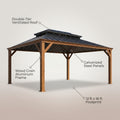
Aluminum Louvered Pergola, Outdoor Pergola with Adjustable Louvered Roof →
Experience and References
- How many pergolas have you installed in the past year, and can you share two or three recent addresses or photos?
- Can I speak with a past client whose project was similar in size and attachment type to mine?
Ask questions beyond "were you happy": Did the crew show up when promised? Was the final invoice close to the estimate? What triggered any change orders? Did the contractor return for warranty issues?
Scope, Schedule, and Payment
- Is this a flat installation fee or an hourly rate, and what triggers overage?
- What is the start date and the expected completion date, stated in working days and calendar days?
- What is the payment schedule, and how much is due upfront?
A milestone-based schedule, deposit at signing, payment after footings, payment after frame, final payment after inspection and cleanup, protects both sides. A large upfront deposit with no milestones leaves you little leverage if the crew disappears.
Warranty and Contract Terms
- What does your workmanship warranty cover, and for how long?
- Does the manufacturer's product warranty pass through to me, and what does it exclude?
- How are change orders handled, written and signed before work proceeds?
Get every answer in writing and attach it to the contract, which should include the written scope, line-item estimate, payment schedule, start and completion dates, change-order process, and warranty terms.
A Short Vetting Checklist
Before signing, confirm you have:
- Verified the license or registration number with the issuing agency
- Received a current certificate of insurance with an agent contact
- Confirmed in writing who pulls the permit and who pays for re-inspection
If any box is unchecked, the conversation is not finished, and neither is the hiring decision.
DIY Pergola Kit vs Contractor Installation
DIY pergola kits trade labor cost for your own time; contractor installation trades money for speed and warranty coverage. Neither is automatically cheaper once you count tools, mistakes, and weekends.
Many kits are designed for straightforward assembly. Our aluminum louvered pergola lists assembly at 2-3 hours with 3-4 people using the included bolts, and a cedar kit with pre-drilled components follows a similar path.

Before deciding, run the numbers on both paths. Our DIY pergola installation cost breakdown shows what the kit-and-tools route actually totals so you can hold it against contractor quotes.
How Long Pergola Installation Time Really Takes
Most straightforward pergola installations take one to three days, with site prep and curing time often adding more. Installation time depends less on the structure than on the ground beneath it.
A typical sequence looks like this:
- Site marking and utility checks
- Footing excavation and concrete pour
- Concrete cure time before posts go in
- Frame and roof assembly
- Anchoring, leveling, and cleanup
Concrete curing is the wildcard. Contractors cannot rush it, so a job that looks like a one-day build can stretch across a week of calendar time. Ask your contractor to state both working days and total elapsed days in the quote.
Permits, Property Checks, and Contract Terms
Permit requirements vary by jurisdiction, so confirm local rules before work starts.
Property checks matter too. If your pergola will sit on an existing slab, our guide on how to anchor a pergola on concrete covers the safe approach.
Read contract terms closely. Look for a payment schedule tied to milestones, a start and completion date, a change-order process, and written warranty coverage.
Choosing Your Pergola and Installation Path
The right path depends on your site, timeline, and how much work you want to own. If the ground is level and the kit is designed for simple assembly, DIY can work well.
For homeowners ready to pick a structure, browse the cedar wood pergola kit if you want natural warmth, or the finished aluminum louvered pergola if you want adjustable shade and low upkeep.

Frequently Asked Questions
How much does it cost to hire a contractor to install a pergola?
Contractor labor for pergola installation typically runs $500 to $3,000, depending on size, material, and site conditions. A simple prefab kit on a level patio sits at the low end; a large custom wood structure with concrete footings and electrical work pushes toward the top. Material costs sit on top of labor, so a cedar kit priced around $2,199.97 plus installation gives you a realistic all-in figure. Always get two or three written quotes before committing.
What should a pergola installation estimate include?
A complete pergola installation estimate should list labor hours or a flat installation fee, site preparation, concrete footings and anchoring hardware, permit fees if required, and disposal of packaging. It should also state whether the contractor supplies the structure or installs a kit you bought. Ask for the quote in writing with each line item separated so you can compare bids side by side rather than judging a single lump sum.
Is it cheaper to build a pergola yourself or hire a contractor?
A DIY pergola kit is cheaper on paper because you skip labor, and many kits assemble in 2-3 hours with 3-4 people. But the savings shrink if you need a concrete pad poured, footings set, or a permit pulled. Hiring a contractor makes sense when the site is uneven, the structure is large, or local code requires inspections. Weigh your comfort with anchoring and digging against the labor quote.
Do I need a permit to install a pergola?
Permit rules vary by municipality, and many jurisdictions require one for any attached or freestanding structure above a certain size or height. Call your local building department before signing a contract and ask specifically about setbacks, height limits, and whether footings need inspection. A reputable contractor will know the local requirements and should include permit handling in the written quote rather than leaving it to you after the fact.
The hardest part of this project isn't the build, it's knowing which costs are real and which are padding. Oasis Patio Direct carries weather-resistant pergolas built for straightforward assembly, backed by a 30-day risk-free trial and free shipping on orders over $100. Start with the structure, then decide on installation. Get started with Oasis Patio Direct and turn your patio into a retreat you'll actually use.