Do Fire Tables Provide Warmth for Your Patio?
Share
A beautiful patio can still clear out early when the temperature drops. So, do fire tables provide warmth? Yes - when you choose the right output and arrange seating thoughtfully, a fire table can make a crisp evening feel comfortably worth lingering over, from a casual glass of wine to a long dinner with friends.
A fire table is not meant to heat an entire backyard the way an indoor furnace heats a room. It is a focused source of radiant warmth and atmosphere. Think of it as the warm center of your outdoor living area: a place that draws people in, gives an open-air lounge a sense of occasion, and extends the season on your patio, deck, or poolside retreat.
How Much Warmth Does a Fire Table Provide?
Most gas fire tables produce between 40,000 and 60,000 BTUs. That range is substantial for an outdoor gathering area, especially when guests sit within a few feet of the flame. On a calm 50-degree evening, a well-built fire table can take the chill out of the air for people seated around it. On a still, mild night, it may be enough to keep the gathering outside long after sunset.
The warmth you feel comes primarily from radiant heat. Flames warm nearby people and surfaces directly rather than warming the full volume of outdoor air. That distinction matters. You may feel pleasantly warm while seated near the fire, while someone standing 10 feet away feels very little difference.
For most residential patios, a fire table works best as a comfort layer, not the only plan for cold-weather entertaining. Add cozy cushions, a throw basket, and a layout that keeps conversation close to the flame, and the space becomes a destination worth lingering in.
BTUs Are Useful, but They Are Not the Whole Story
A higher BTU rating generally means more heat, but it does not automatically mean a better experience. A powerful burner in an oversized, exposed patio can lose much of its effect to wind. Conversely, a moderate-output table in a protected courtyard can feel surprisingly effective.
The burner design also affects performance. A broad burner can distribute flame across the tabletop and create a generous visual presence. A concentrated burner may send more heat toward the people seated closest to it. Both can be appealing, depending on whether your priority is an intimate lounge setting or a larger social centerpiece.
Do Fire Tables Provide Warmth in Windy Weather?
They do, but wind is the biggest variable. A light breeze can carry warmth away before it reaches your seating area. Stronger wind can make guests feel cold even with a lively flame, and it may affect how steadily the fire burns.
This is where the overall patio design earns its place. Positioning a fire table near a privacy wall, beneath a covered structure with open sides, or alongside a pergola with curtains or privacy panels can reduce exposure without closing off needed airflow. A thoughtful layout does more than make the space look polished. It helps the fire table perform as intended.
Avoid placing a fire table where prevailing wind funnels between the house and a fence. If you are planning a new outdoor room, notice where leaves collect and where a candle flame flickers before choosing the furniture arrangement. Those small observations often reveal the most comfortable location.
The Right Distance Makes the Difference
Fire tables feel warmest when seating is close enough to benefit from radiant heat but far enough away to remain comfortable. In many settings, 3 to 5 feet from the edge of the table is a practical starting point. That distance gives guests warmth around their legs and torso while leaving room to move naturally.
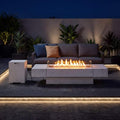
A low fire table paired with deep lounge seating creates a relaxed, resort-inspired feel, but check the seat height. If the table is too low compared with the cushions, the flame may sit below knee level and offer less perceived warmth. A taller fire table with dining-height chairs can work beautifully for drinks and appetizers, though the table surface and flame placement should still leave guests enough room to dine comfortably.
Scale matters, too. A compact fire table can be ideal for two to four chairs on a balcony or small patio. A wider rectangular model better serves a sectional or a pair of sofas, allowing more people to sit within the warmth zone. The goal is not simply to fill square footage. It is to make every seat feel included.
Fuel Type and Heat Output
Propane and natural gas fire tables can both provide meaningful warmth. The best choice usually comes down to convenience, installation, and how often you expect to use the table.
Propane models offer flexibility. They are especially appealing when you want to place the fire table away from a gas line or prefer a simpler setup. Many designs conceal the tank within the base, preserving the clean, furniture-like look of the piece. The trade-off is that the tank must be monitored and replaced or refilled.
Natural gas models are ideal for homeowners who want reliable, frequent use without managing propane tanks. Once professionally connected, they are ready whenever the evening calls for it. Installation requires more planning, and the table will be less movable, but the convenience can be well worth it for a permanent patio centerpiece.
Wood-burning fire tables and fire pits offer a different kind of heat: intense, familiar, and often more noticeable downwind. They also bring smoke, ash, wood storage, and greater attention to local fire rules. For many refined outdoor living spaces, gas delivers the cleaner, lower-maintenance experience that fits everyday use.
Fire Tables Versus Patio Heaters
If your main question is whether guests will feel warm, a patio heater often reaches farther than a fire table. Tall propane heaters and infrared electric units are designed specifically to project heat over a broader area. They can be smart additions for a large dining patio, particularly during cooler spring and fall evenings.
But a patio heater rarely creates the same gathering point. A fire table brings light, movement, and a natural place for people to settle in. It holds a conversation together in a way functional heat alone cannot. For a complete outdoor retreat, many homeowners use both: the fire table as the visual and social anchor, with discreet supplemental heat where needed.
There is also a practical trade-off around tabletop space. Some fire tables are designed with a generous ledge for drinks and small plates. Others prioritize flame size and leave less surface area. If you love hosting, choose a shape that supports the way you entertain rather than treating the table as decoration alone.
How to Make a Fire Table Feel Warmer
The most comfortable patios layer several simple decisions instead of relying on one high-BTU feature. Start by grouping seating close enough to the table for guests to feel the radiant heat. Use outdoor rugs, deep cushions, and weather-resistant throws to make the lounge feel more insulated and inviting.
Create a degree of wind protection with a pergola, gazebo, privacy screen, landscaping, or the architecture of the home. Be sure any structure and fire table installation follow the manufacturer's clearance requirements and local codes. Open-air fire features need proper ventilation, and safety should never be treated as an afterthought.
Finally, consider the season honestly. A fire table can transform 45- to 65-degree evenings into prime patio time. In freezing conditions or heavy wind, it will provide atmosphere and a welcome warm spot, but guests may still need blankets or supplemental heat. Setting the right expectation leads to a better purchase and a more enjoyable space.
Choosing a Fire Table for Your Outdoor Retreat
Look beyond the flame when comparing options. The materials should suit your climate and style, whether that means powder-coated aluminum, durable composite finishes, stone-inspired surfaces, or a streamlined modern base. A quality cover helps protect the table between gatherings, while a burner cover can convert the surface into usable tabletop space when the fire is off.
Also plan for the room around it. A fire table needs breathing room, clear walking paths, and seating that complements its scale. On a compact patio, a round table can keep the arrangement easy to navigate. In front of a sectional, a rectangular design may feel more tailored and generous. The most successful choice looks considered in daylight and becomes even more inviting after dark.
A fire table will not turn a snowstorm into summer, and it does not need to. Its value is in the evenings that would otherwise end too soon: the quiet hour after dinner, the last stories around the pool, and the spontaneous gathering that becomes the highlight of the weekend. Give it the right setting, and the warmth will feel like part of the welcome.