Best Patio Furniture for Sunny Climates: 2026 Guide
Table of Contents
- What Actually Survives Intense Sun: Quick Comparison
- The Best Outdoor Furniture Materials for Hot Weather
- UV-Resistant Outdoor Furniture: What the Specs Tell You
- Fade-Resistant Patio Cushions and Sunbrella Fabric
- Best Patio Furniture for Sunny Climates: Top Picks
- Shade, Heat Buildup, and Protective Care
- Conclusion: Choosing Furniture That Lasts in the Sun
- Frequently Asked Questions
Last Updated: October 9, 2026
What Actually Survives Intense Sun: Quick Comparison
The best patio furniture for sunny climates resists UV degradation, stays cooler to the touch, and holds its finish through years of direct exposure.
Sun bleaches color, dries and cracks fibers, and drives surface heat. The material you choose decides how well your set handles all three.
Quick Picks:
- Best overall for sun and heat: Anderson Teak Toscana 3-Seater Sofa with Sunbrella cushions
- Best dining set for daily sun: LeisureMod Devon 7-Piece Aluminum Dining Set
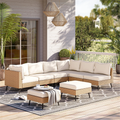
- Best budget-friendly lounge: 8-Piece PE Rattan Sectional with Olefin cushions
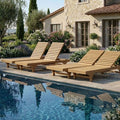
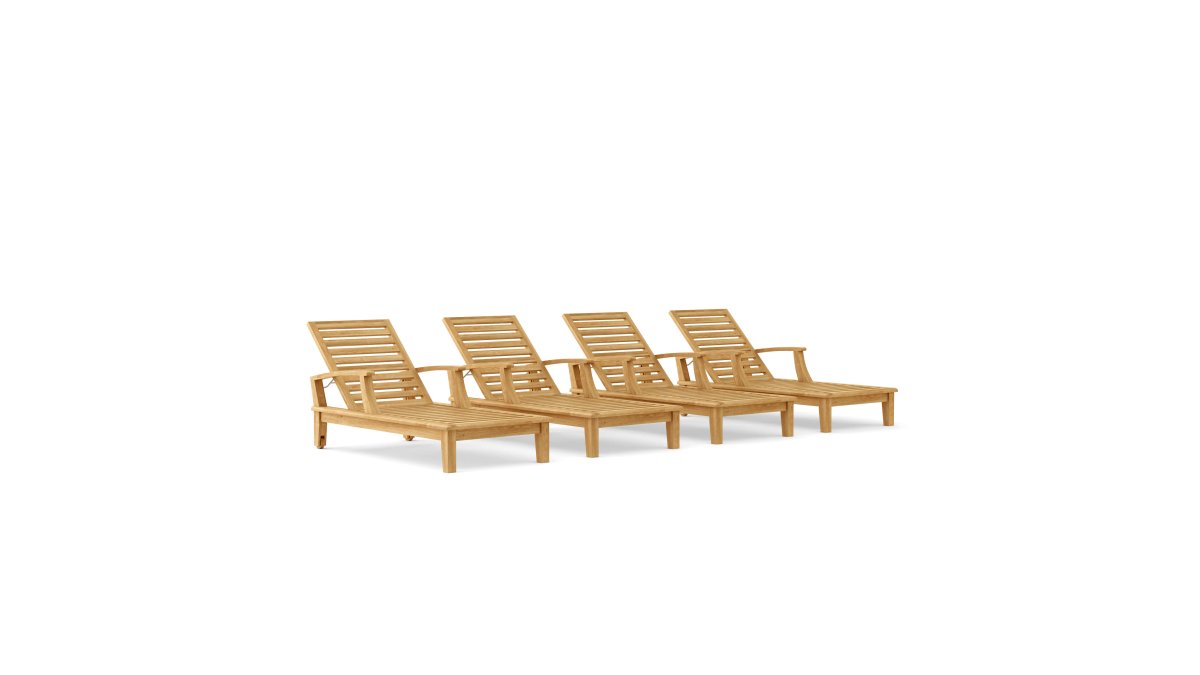
- Best poolside lounger: Anderson Teak Brianna 4-Piece Sun Lounger Set
| Material | UV Resistance | Surface Heat | Maintenance | Best For |
|---|---|---|---|---|
| Teak | High, natural oils | Moderate | Sealer yearly or let it patina | Long-term investment |
| Powder-coated aluminum | High | Low | Wipe clean | Dining, everyday use |
| PE rattan | High | Moderate | Rinse with hose | Modular sectionals |
| Acacia | Moderate | Moderate | Oil twice yearly | Extendable dining tables |
The Best Outdoor Furniture Materials for Hot Weather
Teak and powder-coated aluminum are the best outdoor furniture materials for hot weather because both resist UV damage at the structural level rather than relying on a surface coating that wears off. Teak's natural oils repel moisture and block rot; aluminum cannot rust and its powder coat holds color under constant sun.


But "best" depends on which sun problem you are solving. Materials do not handle bleaching, surface heat, and fiber cracking equally, so match the material to your exposure, not just your style.
Climate-Specific Material Comparison
| Material | UV Resistance | Surface Heat in Direct Sun | Humidity & Corrosion | Maintenance Burden | Realistic Lifespan Outdoors |
|---|---|---|---|---|---|
| Teak | High, natural oils block UV degradation | Moderate; warms slowly | Excellent; resists rot and insects | Sealer yearly, or let it patina | 15-25+ years with care |
| Powder-coated aluminum | High, baked-on finish resists fading | Low; stays coolest of the metals | Excellent; will not rust | Wipe clean; touch up chips | 10-20 years |
| PE rattan (over metal frame) | High, synthetic fibers resist fading | Moderate; depends on frame beneath | Good if frame is galvanized or aluminum | Rinse with hose | 5-12 years, frame-dependent |
| Acacia | Moderate, needs oil to hold color | Moderate | Fair; swells and cracks if untreated | Oil twice yearly | 5-10 years |
| Steel (painted or bare) | Low to moderate | High; gets hot fast | Poor; rusts unless powder-coated | Frequent touch-ups | 3-8 years |
| Plastic resin | Low, brittles and chalks | High in dark colors | Good; will not rust | Minimal | 2-5 years |
How Each Material Actually Fails in Sun
Teak wins on longevity because its density and natural oils work from the inside out.
Powder-coated aluminum wins on comfort in heat. The LeisureMod Devon set pairs a rust-proof aluminum frame with stackable chairs and a tempered glass table that wipes clean.

PE rattan sits in the middle on UV but lives or dies by its frame.
Acacia is the budget hardwood.
Steel is the material to avoid in a sunny, humid climate unless it is fully powder-coated and you accept a shorter lifespan.
Plastic resin is affordable and light, but UV exposure makes it chalk, fade, and turn brittle.
The Long-Term Value Math
Upfront price is the worst way to compare furniture for a sunny climate. Divide the purchase price by the realistic years of service and the ranking flips: a budget resin set that lasts three summers can cost more per year than a teak or aluminum set that runs for fifteen. Add maintenance, oil, sealer, replacement cushions, touch-up paint, and the gap widens further. The cheapest set is rarely the cheapest ownership.
Quick Decision Guide
- Full-day direct sun, pool deck, long-term investment: Teak or powder-coated aluminum.
- Full-day sun, want to move pieces easily: Powder-coated aluminum.
- Moderate sun, covered porch, budget-minded: Acacia with a twice-yearly oiling routine.
- Budget sectional, willing to replace sooner: PE rattan over a galvanized or aluminum frame.
- Avoid for exposed sunny patios: Bare steel and unpainted plastic resin.
UV-Resistant Outdoor Furniture: What the Specs Tell You
UV-resistant outdoor furniture is engineered to block ultraviolet degradation, not just painted to look weather-ready. The spec that matters most is the fabric rating, followed by the frame's finish system.
Look for these signals when you shop:
- Solution-dyed fabric: Color is baked into the fiber, so it cannot wash out. Sunbrella is the benchmark here.
- Powder-coated frames: A baked-on finish that resists chipping and fading better than wet paint.
- Marine-grade hardware: Brass or stainless steel fasteners that do not corrode in humidity.
- Kiln-dried wood: Moisture content stabilized to prevent warping under heat.
The Anderson Teak Toscana sofa checks all four. Its Sunbrella cushions carry UV-stable pigments, and the frame arrives fully assembled with marine-grade brass and stainless steel fittings.
"Weather-resistant" and "UV-resistant" are not the same claim. A frame can shrug off rain and still fade in sun, so ask specifically about UV performance before you buy.
Fade-Resistant Patio Cushions and Sunbrella Fabric
Cushion fabric is where cheap sets fail first.
Sunbrella acrylic: Color pigments run through the entire fiber. Resists fading, water, mold, and mildew. Found on the Toscana and Copacabana sets.
Olefin: A water-resistant, anti-aging synthetic used on the 8-Piece PE Rattan Sectional. Holds up well in sun and cleans easily.
The cushion core matters too. Look for high-density foam wrapped in fiber, like the 6-inch cushions on the Anderson Teak sets.
Anderson Teak 4-Piece Brianna Sun Lounger Set →
Sunbrella fabric care and cleaning guidance covers how to spot-clean and machine-wash covers without stripping UV protection.
Best Patio Furniture for Sunny Climates: Top Picks
The best patio furniture for sunny climates combines UV-stable fabric, a heat-resistant frame, and hardware that will not corrode. Every pick below is chosen for how it performs under constant sun, not just how it looks on day one.
Dining Sets for Sun-Drenched Decks
The LeisureMod Devon Modern 7-Piece Aluminum Outdoor Dining Set is our top pick for daily outdoor dining.
For larger gatherings, the 9-Piece Acacia Wood Dining Set offers an extendable table and eight chairs with water-resistant cushions at $1,999.97.
Lounge and Sectional Sets for Poolside Relaxation
The Anderson Teak Toscana Modern 3-Seater Deep Seating Patio Sofa is the set we would buy for a sun-exposed pool deck.
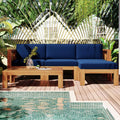
For a bigger footprint, the Anderson Teak Copacabana 6-Piece Modular Set lets you rearrange five seating units into an L-shape, a long sofa, or separate islands. The wide-slat Brianna coffee table drains rainwater fast.
Budget-conscious shoppers should look at the 8-Piece PE Rattan Sectional at $899. It seats eight, uses UV-resistant Olefin cushions, and the two ottomans convert to coffee tables.
Shade, Heat Buildup, and Protective Care
Shade and smart care routines extend the life of any set, even the best patio furniture for sunny climates. Surface heat and UV exposure age furniture fastest, and both are manageable, but only if you understand how they work.
Why Surface Heat Matters More Than Air Temperature
On a 95°F afternoon, a dark metal or composite seat in direct sun can reach surface temperatures well above the air temperature, hot enough to be uncomfortable through clothing and damaging to foam and finish over time. Lighter colors reflect more of that energy; darker colors absorb it, which is why two identical chairs in different finishes feel completely different at 2 p.m. Choose lighter frame and cushion colors for exposed areas, and add shade over the seats you use most.
Shade Strategies That Do Not Require Moving Furniture
Most people cannot haul a sectional indoors every afternoon. Instead, build shade into the space:
- Cantilever and market umbrellas shade seating without a center pole blocking the table. A tilt feature lets you track the sun through the afternoon.
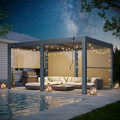
- Pergolas and shade sails cut direct UV on both frames and cushions and drop surface temperatures underneath.
- Strategic planting, a shade tree or tall hedge on the west side blocks the harshest late-afternoon sun.
- Furniture covers protect pieces you cannot move, especially during the hottest weeks when UV intensity peaks.
A Simple Care Calendar for Sunny Climates
- Monthly: Rinse cushions and frames with a hose to remove dust, pollen, and sunscreen residue that trap moisture against fabric. Check fasteners for loosening.
- Seasonally: Re-oil acacia and untreated teak to prevent drying and cracking. Inspect powder-coated frames for chips and touch up promptly, a chip is where rust starts.
- During peak heat: Store cushions when not in use. Foam cores trap heat and moisture, and cushions left out all summer break down faster than the frames they sit on.
- Before off-season storage: Clean and fully dry everything, then cover or store cushions indoors. Mildew starts in fabric put away damp.
EPA guidance on UV radiation and sun safety explains how prolonged ultraviolet exposure degrades materials over time, the same force that fades fabric and dries wood.
Conclusion: Choosing Furniture That Lasts in the Sun
Picking furniture that survives intense sun comes down to material honesty. Teak and powder-coated aluminum hold their structure and finish longest, solution-dyed fabrics like Sunbrella keep their color, and marine-grade hardware prevents the corrosion that quietly ruins cheap sets. Buy for the climate, not the catalog photo.
At Oasis Patio Direct, we build our collection around weather-resistant materials, straightforward assembly, and a resort-style look that holds up season after season.
Explore the Collection and turn your sun-drenched patio into a private retreat built to last.
Frequently Asked Questions
Which material is best for outdoor patio furniture in sunny climates?
Teak, powder-coated aluminum, and PE rattan hold up best in intense sun. Teak contains natural oils that resist moisture and UV damage, and it can be left untreated to develop a silver-gray patina. Powder-coated aluminum resists rust and fading, while PE rattan is UV-stabilized to prevent cracking. Avoid untreated softwoods and low-grade plastics, which warp and fade within a season or two.
How do you keep patio furniture from fading in the sun?
Start with UV-resistant outdoor furniture, then add protection. Use fade-resistant patio cushions made from solution-dyed acrylic like Sunbrella, which holds color at the fiber level. For teak, apply a teak sealer once a year to preserve the honey-gold tone, or let it weather naturally. Move cushions inside during peak UV hours, and use a pergola or umbrella to cut direct sun exposure by half.
Does teak furniture hold up well in hot, sunny weather?
Yes. A-grade teak like the Anderson Teak Brianna Sun Lounger Set is kiln-dried to 8-12% moisture, which prevents warping and cracking in heat. Its natural oils repel moisture and resist UV damage. Left untreated, teak ages to a silver-gray patina with minimal care. To keep the original golden color, apply a teak sealer annually. Mortise-and-tenon joinery keeps frames tight through decades of sun exposure.
What fabric is best for outdoor cushions in direct sunlight?
Solution-dyed acrylic, such as Sunbrella, is the top choice for direct sun. The pigment is added to the fiber before it is spun, so color does not wash out under UV. It also resists mold, mildew, and water. Olefin is a budget-friendly alternative with good UV resistance and water repellency. Avoid polyester and cotton blends, which fade and degrade quickly in intense sun.
Can you leave outdoor furniture out in the rain and sun year-round?
Teak, powder-coated aluminum, and PE rattan frames can stay outside year-round in most climates. Cushions should be brought in or covered during heavy rain to prevent mildew and foam breakdown. If you live in an area with intense sun and occasional storms, choose furniture with drainage-friendly slats and quick-dry foam. A 30-day risk-free trial from Oasis Patio Direct lets you test how a set handles your specific climate before committing.