Outdoor Sectional Sofas That Make Patios Feel Larger
Share
A patio can have plenty of square footage and still feel like a pass-through. The difference is often seating with enough presence to invite people to stay. Outdoor sectional sofas create that invitation, giving a deck, poolside terrace, or covered patio the relaxed comfort of a well-designed living room while defining a true destination for gathering.
The right sectional does more than provide extra seats. It shapes traffic flow, gives a large open area purpose, and makes everyday outdoor time feel more intentional. Morning coffee, a long lunch with friends, movie night under a pergola, or a quiet hour after work all become easier to imagine when the seating is generous, comfortable, and arranged around how you actually live.
Why Outdoor Sectional Sofas Change the Entire Space
A pair of patio chairs can furnish an outdoor area, but a sectional anchors it. Its connected form creates a natural conversation zone, particularly in large backyards where individual pieces can look scattered. On smaller patios, the same shape can make better use of a corner than several standalone chairs competing for floor space.
That sense of connection matters when you host. Guests do not have to pull chairs into a circle or balance on the edge of a dining seat after dessert. A sectional makes room for the easy part of entertaining: the lingering. Add a low fire pit or coffee table at the center, and the space immediately has a focal point without feeling overly arranged.
There is a practical side, too. Modular outdoor sectionals can often be reconfigured as your needs change. A deep lounge layout may be perfect for weekends with family, while separate armless pieces can create more flexible seating for a larger celebration. The best choice depends on whether your patio is primarily a retreat for two, a family hangout, or an extension of your entertaining space.
Start With the Layout, Not the Sofa
The most beautiful sectional can feel wrong if it overwhelms the patio. Before choosing a configuration, map the usable area rather than measuring only the full deck or terrace. Account for doors that swing outward, grill clearance, steps, planters, pool access, and the walking paths people naturally take.
As a general rule, preserve about 30 to 36 inches for a comfortable path around the seating group. If the sectional faces a fire pit or coffee table, leave enough room to stretch out your legs and stand easily. A cramped layout does not feel luxurious, no matter how refined the materials are.
Choose the Shape That Supports Your Routine
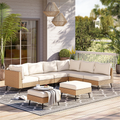
An L-shaped sectional is a natural fit for corners and rectangular patios. It gives a defined lounge area while keeping one side open to the yard, garden, or view. This is often the most versatile choice for homeowners who want substantial seating without closing off the space.
A U-shaped configuration feels more social. It places guests around a central table or fire feature and works especially well beneath a gazebo or large pergola, where the overhead structure already establishes a room-like boundary. It needs more breathing room, however, so it is better suited to a generous patio or pool deck.
For long, narrow spaces, consider a smaller modular arrangement with a chaise on one end rather than a deep corner sectional. You will retain the inviting look of a lounge while avoiding the boxed-in effect. If your outdoor area is exposed to a particularly beautiful view, arrange the sectional to face it instead of automatically pushing every piece against a wall or railing.
Choose Materials for Your Climate and Your Standards
Outdoor furniture should look considered on day one and remain dependable after many seasons of sun, rain, pollen, and patio life. Material selection has a direct effect on both appearance and maintenance.
Powder-coated aluminum is a favorite for good reason. It is lightweight enough to reposition, resistant to rust, and well suited to humid or coastal environments when properly cared for. Its clean lines work beautifully in contemporary spaces, especially when paired with warm wood accents, stone, or textured outdoor rugs.
Teak offers a different kind of presence. Dense, naturally weather-resistant, and visually rich, it brings an enduring warmth to outdoor sectionals and complements gardens, traditional architecture, and elevated resort-style settings. Teak can be allowed to develop a soft silvery patina, or maintained to preserve its honey-toned color. Neither approach is wrong. It is simply a design choice paired with a willingness to perform occasional care.
All-weather wicker remains a strong option for a softer, more relaxed look. Look for high-quality synthetic resin woven over a durable frame, not lightweight natural wicker that was never intended for changing weather. A well-made wicker sectional can feel inviting and substantial, but construction matters. Check the frame material, cushion support, and weave quality rather than judging by appearance alone.
Steel can offer excellent strength and a tailored silhouette, though it typically requires greater attention in wet or coastal regions. Wherever you live, furniture covers and seasonal cleaning will extend the life of the finish. Premium outdoor living is not zero maintenance, but it should be low stress.
Cushions Are Where Comfort Becomes Credible
Deep seating is one of the main reasons homeowners choose a sectional over basic patio chairs. Do not treat the cushions as an afterthought. Their fabric, fill, thickness, and construction determine whether the sofa feels like a place to settle in or a place to perch.
Look for performance fabrics designed to resist fading, moisture, and everyday stains. Solution-dyed acrylic is a popular premium choice because color is built into the fiber rather than printed on the surface. It is especially valuable in intense sun, where lower-grade fabric can fade unevenly after a single season.
Quick-drying foam or breathable cushion construction also matters. After a summer shower, water should drain and air should circulate rather than remain trapped inside a heavy cushion. In rainy climates, removable covers and cushions that can be stood on edge to dry make routine care much easier.
Color deserves the same thought as construction. Light neutrals keep a compact patio open and airy, but may show barbecue sauce, wet paws, and garden debris more readily. Charcoal, warm taupe, olive, and patterned accent pillows can be more forgiving while still feeling polished. If you choose a neutral sectional, add personality through pillows, a throw for cooler evenings, and a rug that ties the seating area to the rest of the landscape.
Build a Lounge Area That Feels Finished
A sectional is the anchor, not the entire room. The pieces around it determine whether the setting feels inviting at 2 p.m. and memorable at 9 p.m. Start with a table sized for your use. A coffee table supports drinks and shared plates, while a fire pit table can add warmth and atmosphere if proper clearances and local guidance allow it.
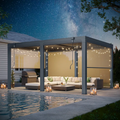
Shade changes how often the space gets used. A pergola, gazebo, umbrella, or adjustable louvered roof can make midday lounging far more comfortable, particularly in high-sun regions. Consider the direction of late-afternoon light, not only the sun at the moment you shop. That low glare is often what sends everyone indoors just when dinner is ready.
Layer in lighting at more than one level. Overhead lighting helps with meals and movement, while lanterns, sconces, or soft table lighting create the calm, welcoming atmosphere that makes an evening outside feel like a getaway. Avoid placing every light source at eye level. Softer, indirect illumination is more flattering and more relaxing.
An outdoor rug can define the sectional zone and make the arrangement feel grounded, especially on large concrete patios. Choose a size large enough for at least the front legs of the sectional to sit on it. A rug that is too small tends to make substantial furniture look disconnected.
Protect the Investment Without Treating It Like Fine China
Quality outdoor furniture is built for life outside, but simple habits preserve its finish and comfort. Brush off pollen and debris before it collects in woven surfaces or cushion seams. Clean frames with mild soap and water as recommended by the manufacturer, and address spills on fabric promptly rather than letting them set in the sun.
Covers are most useful when they fit well and allow airflow. A cover that traps moisture can create its own problems, particularly after rain or in humid conditions. During extended periods of severe weather or winter storage, remove cushions if possible and keep them clean and dry. This is less about fussing over furniture and more about ensuring the first warm weekend of the season begins with a space that is ready to enjoy.
When choosing a sectional, prioritize a configuration that fits your home, materials that suit your climate, and cushions you will genuinely want to sink into. Oasis Patio Direct curates outdoor pieces with that kind of long-term comfort in mind. Set the scene well, and your patio will stop being the view from the house and become the place everyone hopes to end up.