Designing a Cohesive Outdoor Living Space in 2026
Table of Contents
- Why Cohesion Is the Difference Between a Patio and an Outdoor Room
- Modern Backyard Retreat Ideas 2026: Design Trends Worth Building Around
- Outdoor Living Space Layout Planning: Zoning, Flow, and Scale
- Choosing Weather-Resistant Outdoor Furniture That Lasts
- Hardscaping and Softscaping: Materials That Tie the Space Together
- Shade Structures, Pergolas, and Lighting for Year-Round Use
- Sustainable, Smart, and Accessible Upgrades Most Guides Skip
- Maintenance Planning: Protecting Your Investment Season After Season
- Frequently Asked Questions
Last Updated: September 28, 2026
Why Cohesion Is the Difference Between a Patio and an Outdoor Room
Designing a cohesive outdoor living space means tying every element, hardscaping, furniture, lighting, into one visual and functional whole. A patio is a slab with chairs on it. An outdoor room is a destination.
Modern Backyard Retreat Ideas 2026: Design Trends Worth Building Around
The strongest 2026 trend is the outdoor room concept: treating a patio or deck as a true extension of the home, not a seasonal add-on.
Three ideas are worth building around:
- Defined zones over open slabs. Homeowners are splitting one large patio into an entertaining space, a relaxation area, and a cooking zone instead of leaving one undifferentiated surface.
- Warm, natural materials. Wood-look porcelain tile, matte powder-coated metal, and woven wicker are replacing glossy finishes that show every scratch.
- Fire as a focal point. A fire pit table gives a seating group a center and extends usable evenings well past sunset.
The Trend Nobody Lists: Designing for Maintenance and End-of-Life
What separates a space that still looks intentional in year five from one that looks tired is designing for maintenance and material end-of-life from the first sketch.

A practical way to plan for it:
- Group materials by service life. Put the pieces you will replace on the same cycle (cushions, rugs, umbrellas) in one visual family so a single refresh restores the whole look. Keep the pieces you will keep (frame, hardscape, pergola) in a neutral, timeless finish.
- Choose finishes that patina instead of fail. Matte powder coat, oiled hardwood, and unglazed porcelain wear gracefully; high-gloss finishes and thin veneers show every chip.
- Design for disassembly. Modular sectionals, bolt-together pergolas, and loose-lay pavers can be repaired or reconfigured instead of replaced whole.
Sustainability as a Cohesion Strategy, Not a Checkbox
Most guides treat sustainability as a separate topic. It is one of the strongest cohesion tools available, because native and climate-adapted plantings share a palette and growth habit that manufactured plantings never will.
Three moves that pay off:
- Native and climate-adapted plantings. These tolerate local rainfall patterns without constant irrigation, so they hold their shape through dry spells instead of thinning out and breaking the visual line.
- Permeable hardscape. Permeable pavers, gravel, and open-joint systems let water infiltrate on site rather than sheet across the patio. That reduces puddling at the base of furniture and cuts runoff that erodes plantings.
- Rain-conscious drainage. Grading and runoff planning belong in the design phase, not after the first storm. Water that pools against a foundation or under a deck damages both hardscape and plantings.
Outdoor Living Space Layout Planning: Zoning, Flow, and Scale
Outdoor living space layout planning starts with zoning: dividing the yard into distinct areas for distinct activities, then connecting them with clear walking paths. Skip zoning and you get one crowded rectangle.
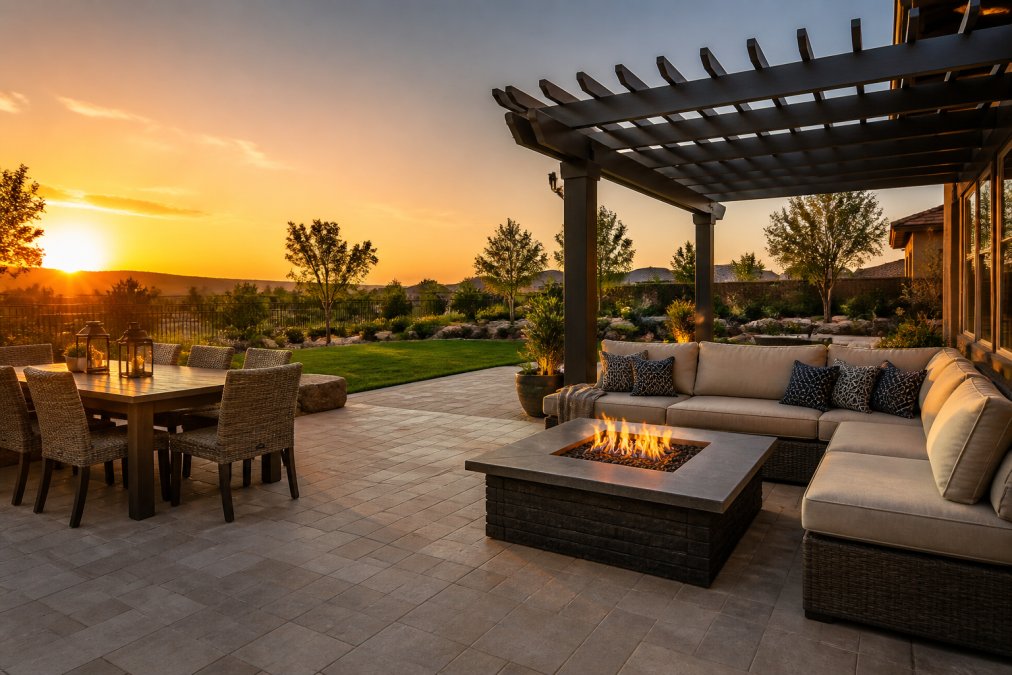
Zoning an Entertaining Space, Relaxation Area, and Outdoor Kitchen
Give each activity its own footprint. An entertaining space wants seating around a focal point, not pushed against a wall. A relaxation area wants distance from the grill and traffic path. An outdoor kitchen wants proximity to the house for plumbing, power, and carrying plates.
Transitional Space and Indoor-Outdoor Connection
The transitional space between your door and your patio sets the tone. Repeat an interior material outside, a flooring tone, a cushion color, a metal finish, and the yard reads as a continuation of the house rather than a separate lot.
Choosing Weather-Resistant Outdoor Furniture That Lasts
Choosing weather-resistant outdoor furniture comes down to the frame, the cushion, and the climate. Get the frame right and the piece lasts a decade. Get it wrong and you replace it in two summers.
Materials, Upholstery, and All-Weather Fabrics Compared
| Material | Best For | Watch Out For |
|---|---|---|
| Powder-coated aluminum | Humid and coastal climates | Cheaper thin-gauge frames flex over time |
| All-weather PE wicker | Covered patios, warm climates | Unprotected sun fades low-grade weave |
| Teak and dense hardwoods | Dry, sunny regions | Needs periodic oiling to hold color |
| Solution-dyed acrylic cushions | Any climate with strong sun | Standard foam holds water without a drain layer |
The frame decides durability. The cushion decides comfort. Most buyers focus on the cushion and regret it later.
LeisureMod Chelsea 7-Piece Outdoor →
Hardscaping and Softscaping: Materials That Tie the Space Together
Hardscaping is the fixed, built layer of a yard: patios, walkways, retaining walls, and decking. Softscaping is everything living: plantings, lawn, and trees. Cohesion comes from making the two agree.
What Actually Holds Hardscape Together
Material choice gets the attention; base preparation and joint type decide whether the surface still looks flat in five years.
- Base and compaction. A paver patio sits on a compacted aggregate base, typically several inches deep depending on the material and the load it carries, with a bedding layer above it. Skip compaction and the surface settles unevenly, which shows up as lippage at the joints and standing water in the low spots.
- Joint type. Polymeric sand locks pavers and resists washout but needs periodic top-off. Open-joint or gravel-set systems drain faster and suit permeable designs. Mortared joints look crisp but crack when the base moves.
- Slope and runoff. A patio needs a slight slope away from the house so water leaves rather than pools. Plan the slope and the runoff path before the pavers go down, not after the first storm.
- Edge restraint. An unrestrained edge lets the field spread outward over time. A hidden edge restraint keeps the pattern tight.
Permeable Hardscape: The Sustainability Move That Also Improves Cohesion
Permeable pavers, gravel, and open-joint systems let water infiltrate on site rather than sheet across the surface, reducing puddling at the base of furniture and cutting runoff that erodes plantings. They also let you use the same paver family across a patio, path, and driveway apron without creating a drainage problem at each transition.
Choosing Plantings That Reinforce the Design
Softscaping should echo the hardscape's geometry and palette, not compete with it.
- Match form to function. Low, mounding plantings along a path read as a border; tall, vertical plantings screen a neighbor or anchor a corner.
- Repeat in threes. Repeating a plant in odd-numbered clusters reads as intentional; scattering single specimens reads as random.
- Choose for the site, not the photo. Native and climate-adapted plants tolerate local rainfall and temperature swings without constant irrigation, so they hold their shape through dry spells instead of thinning out and breaking the visual line.
- Plan for mature size. A shrub that fits the bed at planting can swallow the path in three seasons. Space for the mature footprint, not the nursery pot.
Shade Structures, Pergolas, and Lighting for Year-Round Use
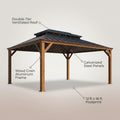
Shade structures and lighting make an outdoor room usable in July and October. A pergola or gazebo controls sun; layered lighting controls the evening.
Sustainable, Smart, and Accessible Upgrades Most Guides Skip
Three upgrades get left out of most design guides, and they are often the ones homeowners appreciate most once the space is finished.
Maintenance Planning: Protecting Your Investment Season After Season
Maintenance planning is the difference between furniture that looks new in year five and furniture that looks tired in year two. The work is small and seasonal, not constant.
Build a simple calendar:
- Monthly: Rinse frames and wipe cushions; check fasteners on pergolas and shade structures.
- Seasonally: Deep-clean cushion covers per the care label; inspect welds, joints, and foot caps.
- Before winter: Store or cover cushions, drain water lines, and check drainage paths for blockages.
- After winter: Inspect hardscape for cracks or shifting, and re-oil wood surfaces if needed.
Frequently Asked Questions
What are the fundamental principles of cohesive outdoor design?
Cohesion comes from three things working together: a consistent color palette, repeated materials, and clear zoning. Pick two or three colors and repeat them across furniture, cushions, and planters. Carry one material, such as powder-coated aluminum or all-weather wicker, across seating and tables. Then divide the yard into defined areas for dining, lounging, and cooking so each zone has a purpose. When those three align, the space reads as one designed room instead of a collection of purchases.
How do I plan a layout for an outdoor living space that actually flows?
Start by measuring your patio or deck and marking doors, steps, and traffic paths. Leave at least 3 feet of walkway between zones so people can move without squeezing past furniture. Place the largest piece, usually a sectional or dining table, first, then arrange smaller seating around it. Keep the fire pit or coffee table within 18 inches of seating for comfortable reach. Sketch the plan on graph paper or use a free planning app before buying anything, so you can test arrangements without moving heavy pieces.
What makes outdoor furniture hold up in intense sun and heat?
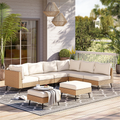
Look for a rust-proof frame, UV-protected cushions, and fabric rated for fade resistance. Powder-coated aluminum resists rust and chemical fading from harsh UV rays, which matters in hot, sunny climates. Cushions should use high-density foam wrapped in water-resistant, fade-proof fabric so they keep their shape and color. For example, the LeisureMod Chelsea 7-Piece Outdoor Sectional Sofa Set pairs a powder-coated rust-proof aluminum chassis with UV-protected washable cushions, so it stands up to sun and heat without warping or fading.
Can I design a cohesive space by ordering individual pieces, or do I need a full set?
You can build cohesion piece by piece if you stay disciplined about color, material, and scale. Choose one finish family, such as matte black aluminum or brown wicker, and repeat it across every item you add. A matched set removes the guesswork, though. The LeisureMod Chelsea 5-Piece Patio Set with Fire Pit Table, for instance, gives you a weather-resistant subframe, deep cushions, and a gas fire pit centerpiece that already coordinate, so you avoid the mismatched look that comes from mixing brands and finishes.